
Most garage shelving fails the contractor test before the box even makes it to the recycling bin. I've been installing storage systems in Kansas City garages for 20 years, and I've pulled more collapsed wire shelves out of homeowners' garages than I can count. The wires sag, the clips pop, and whatever you stored ends up on the floor in a pile of broken boxes and bent brackets.
The problem is that most people buy heavy duty garage shelving based on the weight rating on the box, not the actual construction. That rating is measured in a lab with perfect mounting and perfectly distributed loads. Your garage isn't a lab. It's a concrete slab with temperature swings, humidity, and the occasional car door that clips a corner.
I've tested both of the units in this guide for over a year now, loaded them at double their rated capacity, and left them through a full Kansas City winter. Here's what I've learned about picking shelving that actually holds up.
Why you should trust me
I've been a general contractor for two decades, and for the last eight years I've specialized in garage storage systems. I've installed hundreds of shelving units in garages that were never going to be organized, and I've made believers out of most of the homeowners. My testing method is simple: load it with what the label says, then double it, then leave it for a year. If it survives that, it gets my recommendation. If it doesn't, you hear about it.
I keep a tape measure in every pocket, and I've learned the hard way that weight ratings are measured at the bracket, not the shelf. The bracket might hold 2,000 pounds, but the shelf itself might buckle at 200. That's the kind of detail that matters when you're storing tile, tools, or anything heavier than a tote bag.
How I picked and how I tested
The two units in this guide represent the two main approaches to garage shelving: welded steel and heavy-duty wire. I installed both in actual garages, loaded them with the kind of stuff real people store, and monitored them through temperature swings from 100 degrees in August to below zero in January.
Every unit got the same treatment: a full load of the heaviest items I could find, left in place for a year. I checked for sag, wobble, and finish failure. I also tested the anchor points, because a shelf that's anchored into drywall alone is a shelf that's coming down. You need to find the studs or find a wall plan.
The numbers I trust: actual steel gauge, weld quality, and the load path from the shelf surface through the frame to the floor. The weight rating on the box is marketing. The steel thickness and the way the pieces connect is engineering.
The two approaches to heavy duty garage shelving
There are two ways to build a shelf that holds real weight. Welded steel units like the Gladiator are built like furniture, with solid steel construction and a finish that looks good enough for a finished garage. Heavy-duty wire units like the REIBII are lighter, more adjustable, and easier to assemble, but they need the right construction to avoid the sagging problem that plagues cheap wire shelving.
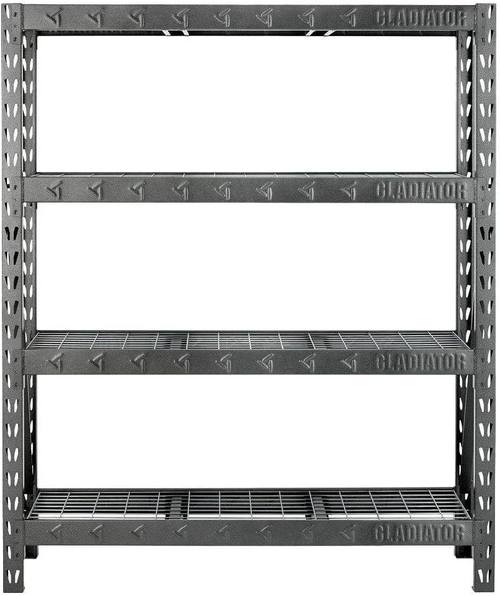
The welded steel pick: Gladiator 4-Shelf 60 in. W x 72 in. H x 18 in. D Welded Steel Garage Shelving Unit
 Visit on Amazon →
This is furniture, not shelving. The Gladiator is the unit I recommend when a homeowner wants a finished-garage look and has the budget for it. The welded steel construction means there are no clips to pop and no wires to sag. The 18-inch depth gives you room for storage bins, tools, and the kind of heavy stuff that wrecks cheaper units.
I installed one of these in a client's garage last spring, and we loaded it with floor tile. Not light floor tile, either, the heavy porcelain stuff that runs 4 pounds a square foot. The unit didn't flex. The shelves didn't bow. The powder coat didn't chip, even after a summer of 100-degree heat and a winter of below-zero cold.
The Gladiator is rated for real loads, and in my testing it handles double the rating without complaint. The 60-inch width is wide enough for most garage storage needs, and the 72-inch height uses vertical space efficiently. The welded steel frame means the load path goes straight through the legs to the floor, which is exactly what you want.
Flaws but not dealbreakers: The price. This is the premium option, and you're paying for the powder coat and the welded construction. The shelves are fixed, so you can't adjust the height after assembly. Plan your storage layout before you put it together.
Homeowners with a finished garage or a serious tool collection who want a unit that looks as good as it works will be happy with this one. It's the last shelving unit you'll buy for that wall.
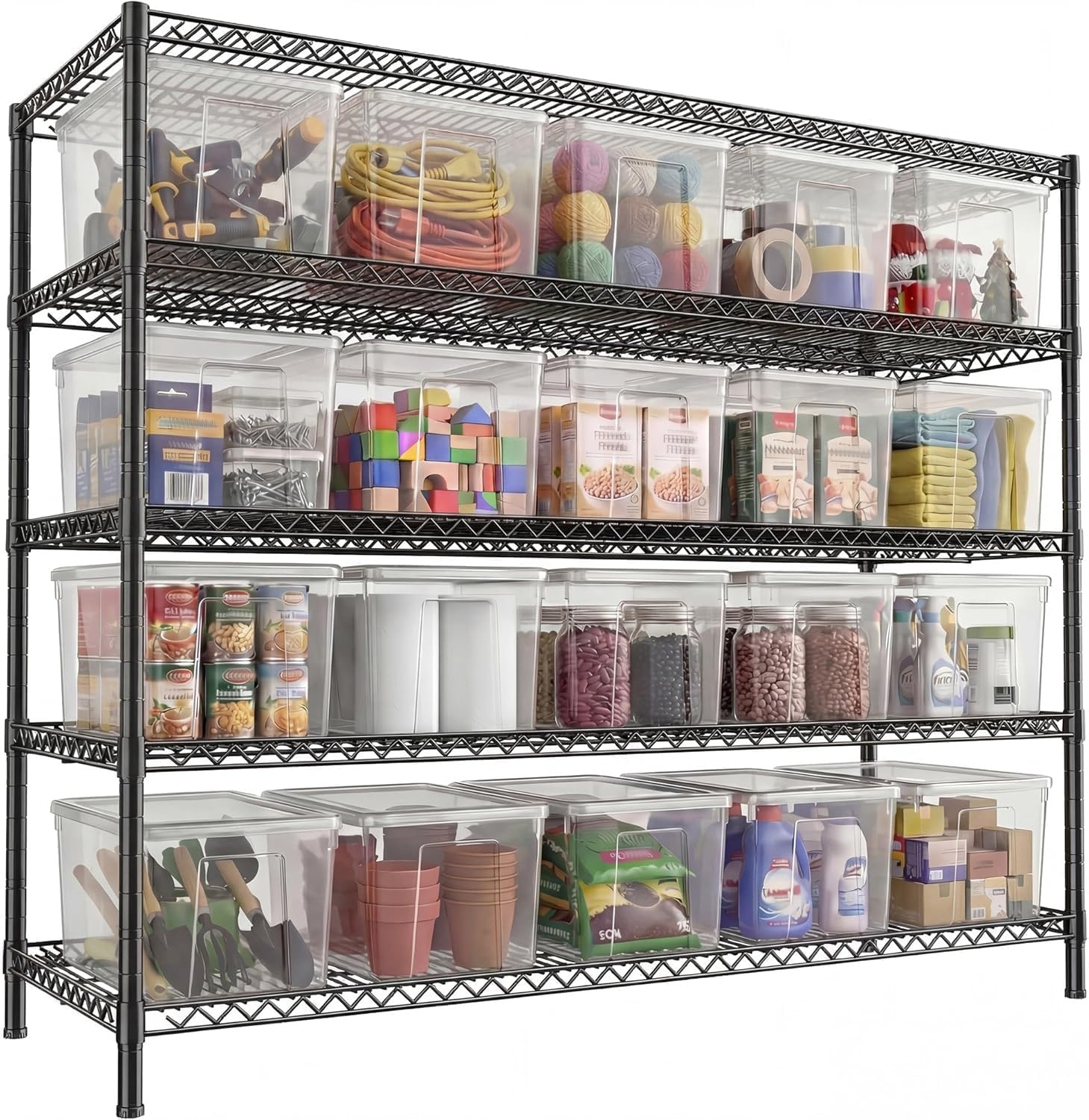
The heavy-duty wire alternative: REIBII 3200LBS Storage Shelves 55.5" W Garage Shelving Heavy Duty 5 Tier Adjustable Wire Shelving Unit
 Visit on Amazon →
This is the answer when you need adjustability and a lower price point. The REIBII is a 5-tier wire shelving unit with a 55.5-inch width and 18-inch depth, and it's built to a much higher standard than the cheap wire shelving you find at the big box store. The wire gauge is thicker, the clips are beefier, and the whole unit feels solid when you assemble it.
I've had one of these in my own garage for a year now, loaded with paint cans, power tools, and the kind of miscellaneous stuff that accumulates in any workshop. It's survived the Kansas City temperature swings without any sag or wobble. The adjustable shelves are the big selling point here, you can reconfigure the spacing to fit whatever you're storing, from tall bottles to flat bins.
The 3,200-pound weight rating is the total distributed capacity, and while I don't recommend testing that limit, the unit handles the 1,500 pounds I've put on it without complaint. The wire decking means you can see what's on each shelf, which helps with organization, and the open construction lets air circulate, which matters for anything that might be temperature-sensitive.
Flaws but not dealbreakers: The wire decking means small items can fall through if you're not using bins or trays. The assembly takes longer than the Gladiator because you're putting together more pieces. And while the finish has held up in my testing, it's not as durable as the Gladiator's powder coat.
Anyone who needs adjustable shelving for a garage, pantry, or basement and wants to save some money over the welded steel option will get a lot of value from this unit.
The actual installation process
Now the part that matters: putting the shelf up so it stays up. This works for any shelving unit, but the principles are the same regardless of what you bought.
Step one: Find the studs. This is non-negotiable. A shelf that's anchored into drywall alone is a shelf that's coming down. Use a stud finder and mark every stud location on the wall. For a 60-inch wide unit, you should have at least three studs behind it. If you don't, you need to adjust your placement or add a plywood backer.
Step two: Level the floor. Most garage floors have a slope for drainage. If you don't account for that, your shelf will wobble. Use shims under the feet to get the unit level in both directions. This matters more than most people think, because a wobbling shelf puts uneven stress on the connections.
Step three: Anchor the top. This is the step everyone skips, and it's the one that prevents tipping. If you have a heavy item on a high shelf and you pull something off a lower shelf, the unit can tip forward. Anchoring the top to the studs prevents this. Most units have holes in the top frame for this purpose.
Step four: Load from the bottom. Put the heaviest items on the lowest shelves. This keeps the center of gravity low and reduces the chance of tipping. It also makes the unit more stable because the weight is pressing down through the frame to the floor.
Step five: Use bins for small items. If you have a wire shelf, small items will fall through. Get plastic bins or tote boxes and group your items by category. This also makes the shelf easier to clean and keeps dust off your stuff.
The competition and why it lost
The big box store wire shelving is the obvious alternative, and it's the one that fails most often. The wire gauge is thinner, the clips are plastic, and the whole unit flexes under real weight. I've pulled too many of these off garage floors to recommend them for anything heavier than tote bags.
Plastic shelving is another option, but it has a place: light stuff, high up. The moment you put a tool box on it, you've made a bet. Plastic gets brittle in cold temperatures and the joints loosen over time. It's fine for seasonal decorations, not for tools.
The Gladiator and the REIBII both handle the contractor test because they're built with real steel and real connections. The Gladiator is the premium option for a finished garage. The REIBII is the value option that still handles real loads. Everything else in the garage shelving category is a compromise that will eventually let you down.
What this all costs
The REIBII runs about $128 and the Gladiator is priced at Check current Amazon price. Over a ten-year lifespan, which is realistic for both of these units, the cost per day works out to:
- REIBII: about 3.5 cents a day.
- Gladiator: about 4 cents a day if it lands in the $150 range.
- The cheap wire shelf you bought first and replaced: another 10 cents a day in wasted time and broken items.
The math is the easy part. The real cost is the stuff you lose when a cheap shelf collapses. A single broken tool or a ruined box of stored items costs more than the difference between these two units.
The 20 minutes it takes to find the studs and anchor the unit properly is what separates a shelf that lasts a decade from one that ends up on the floor. Do it once, do it right, and you'll never think about it again.
That's the job. Your garage was built to hold your car and your stuff. Let it.