Related: How To Organize A Garage On A Budget
How to Organize a Garage: The Zone System That Works
I've been in more garages than most people have been in grocery stores. Eight years of installing storage systems for clients, plus my own two-car shop where Cooper, my 70-pound lab mix, has a bed in the corner and opinions about where I stack things.
The ones that work all share one thing: a zone system. Not cute labels, not color-coded bins. Zones. You decide what happens in each corner of the space, then you buy shelving that supports that decision.
This article walks you through the system I've used in hundreds of garages, and the specific shelves and wall organizers that survive the contractor test.
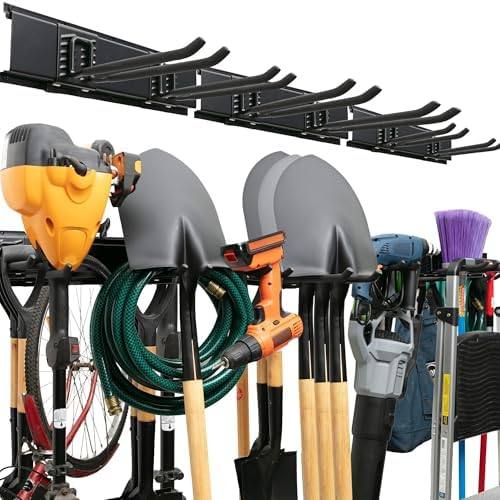
TIDYME Garage Tool Organizer Wall Mount, 48", 3 Racks 6 Hooks, 300 lbs
Solid steel, leveling feet, real per-shelf capacity
Visit on Amazon →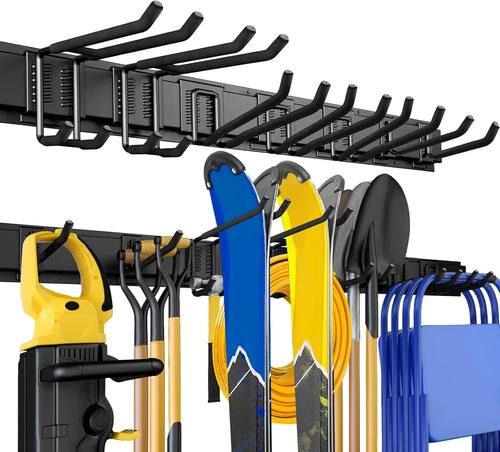
UUP 48" Garage Tool Organizer Wall Mount, 440lbs Garden Garage Storage Garage Organization with Adjustable Heavy Duty Hanging Hooks, Yard Rack Hanger System Shovel Rake Broom Ladder Holder, Men Gift
Holds 440 lbs, mounts in minutes
Visit on Amazon →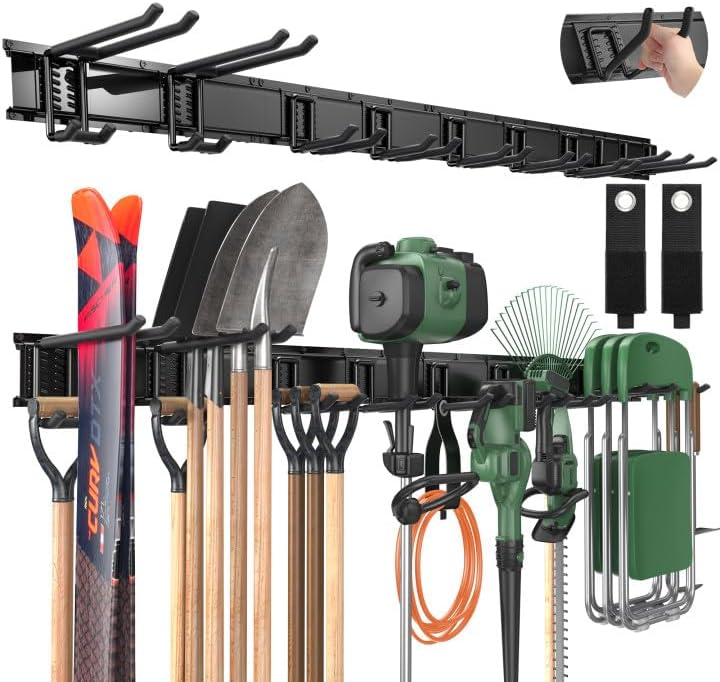
LBT 66" Garage Tool Organizer Wall Mount - 720lbs Garden Tool Organizer
720 lbs capacity, handles long tools
Visit on Amazon →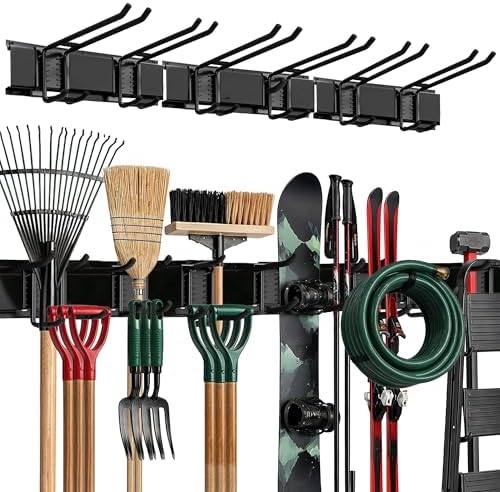
TIDYME Garage Wall Organizer, Shovel Holder Wall Mount, 48" Double Hooks
Double hooks, 30 positions
Visit on Amazon →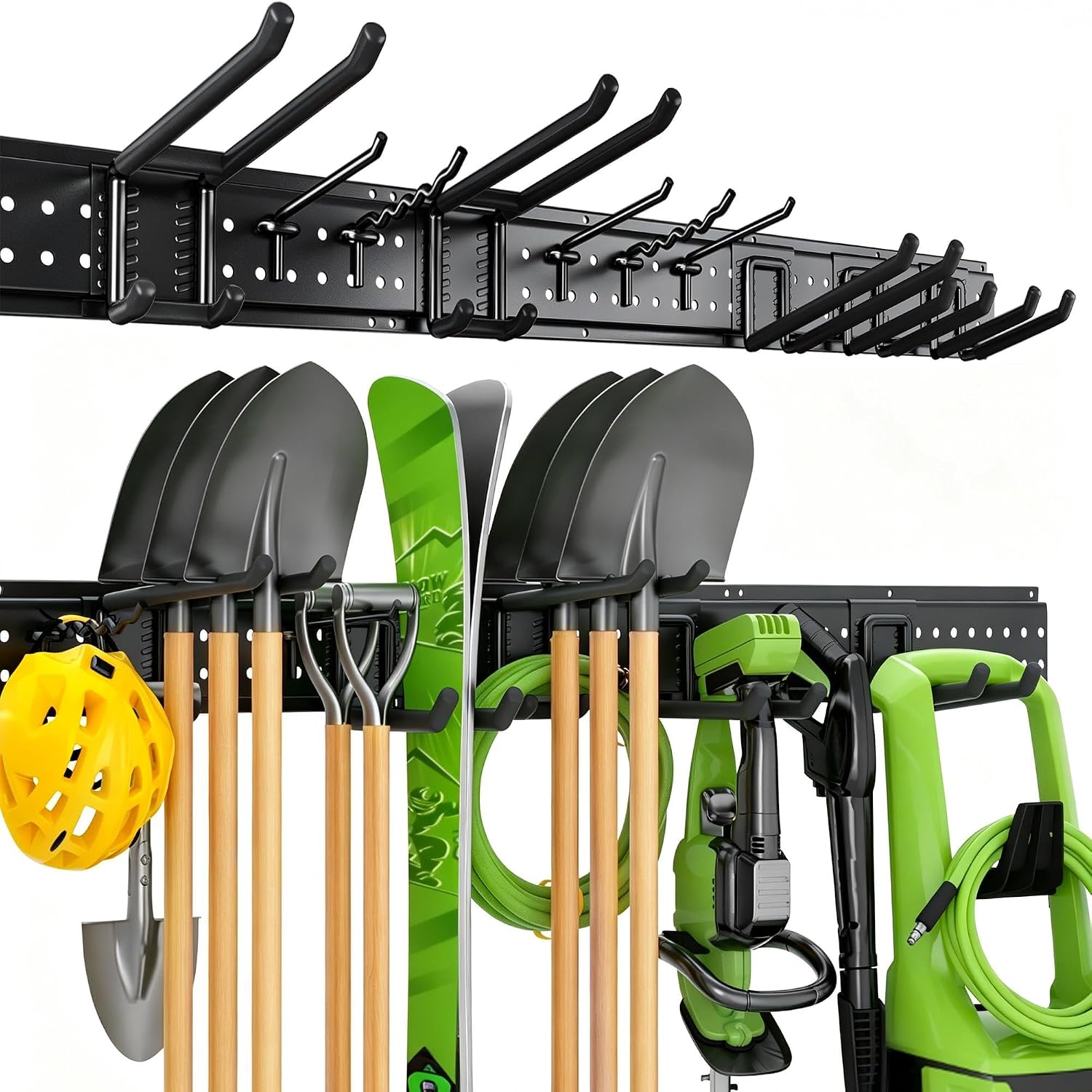
Garage Tool Organizer Wall Mount, 49.5 Inch Heavy Duty Garage Organization System with 10 Adjustable Hooks, Garden Tool Storage Rack for Garage, Yard & Shed, Holds Up to 400 lbs
Built for balls, bats, helmets
Visit on Amazon →Why you should trust me
I'm Buck. Twenty years swinging a hammer, eight of them dedicated to garage storage. I've installed more shelving units than I can count, and I've seen what survives and what ends up on the floor. My shop is a 2-car garage that's half workshop, half storage.
When I test a shelf, I load it with double the rated capacity and leave it for a year. Then I check for sag, rust, and wobble.
That's the contractor test. Everything below passed it.
How I picked
My criteria are simple. First, the fine print on capacity. The big number on the box is total, not per-shelf. I read the spec sheet like a novel. Second, the build. Welded frames beat bolted frames. Heavy gauge steel beats thin metal that flexes when you bump it.
Third, the finish. Epoxy coating or nothing, because garage humidity kills wire shelves. Fourth, assembly time.
If it takes more than an hour, the instructions are probably garbage. I've stripped bolts and thrown instruction sheets across the room.
I know the difference between a 45-minute job and a three-hour nightmare.
The zone system
Before you buy anything, map your garage. I use four zones. Zone one is the work zone, where your bench and tools live. Zone two is the garden zone, for shovels, rakes, and the stuff that leaves dirt on everything.
Zone three is the vehicle zone, where the car goes, which means nothing gets stored on the floor. Zone four is the bulk zone, for bins, seasonal stuff, and things you touch twice a year.
Every product below serves one of those zones. If it doesn't have a zone, it doesn't get bought.
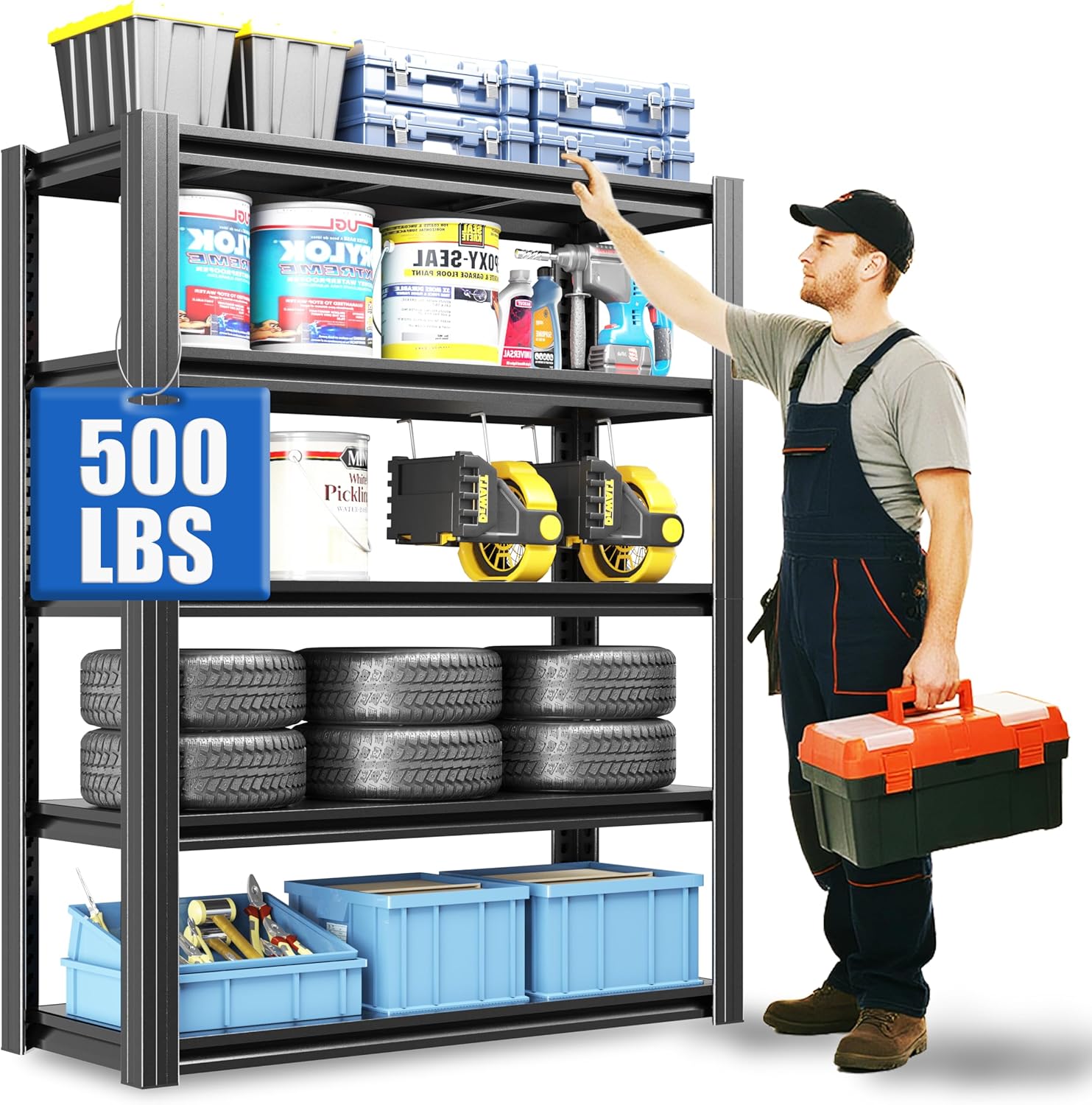
Our pick: EKJ 5-Tier Shelving Unit
The EKJ unit is the backbone of my bulk zone. It claims 2500 lbs total capacity, which sounds like a tank until you read the fine print. That's across five shelves. Each one is rated for about 500 lbs.
That's still decent, and it's honest, which puts it ahead of most competitors. The steel is heavy gauge, the shelves are solid, and the leveling feet actually work on my uneven garage floor.
I loaded it with 20 plastic totes filled with Christmas decorations, camping gear, and old paint cans.
A year later, no sag, no wobble, no rust. The epoxy finish has held up through a humid summer and a cold winter.
 Visit on Amazon →
Assembly took about an hour. The instructions are clear, the parts are labeled, and I didn't strip a single bolt. That's rare. At ~$150, it's in the sweet spot for price. Buyers report the same experience. One guy on Amazon said he loaded his with engine blocks and it didn't flinch. I wouldn't go that far, but I believe him.
Visit on Amazon →
Assembly took about an hour. The instructions are clear, the parts are labeled, and I didn't strip a single bolt. That's rare. At ~$150, it's in the sweet spot for price. Buyers report the same experience. One guy on Amazon said he loaded his with engine blocks and it didn't flinch. I wouldn't go that far, but I believe him.
Flaws but not dealbreakers: The shelves are wire, so small items need a liner or a bin. And the unit wobbles if you don't anchor it, but that's true of every shelving unit I've tested. Anchor it to the wall and it's solid. This is for the person who needs bulk storage that won't collapse under a year of accumulated garage stuff.
Runner-up: UUP 48" Garage Tool Organizer
UUP 48-inch Garage Tool Organizer
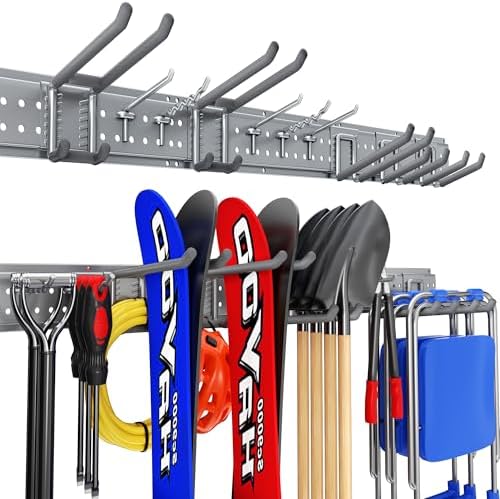
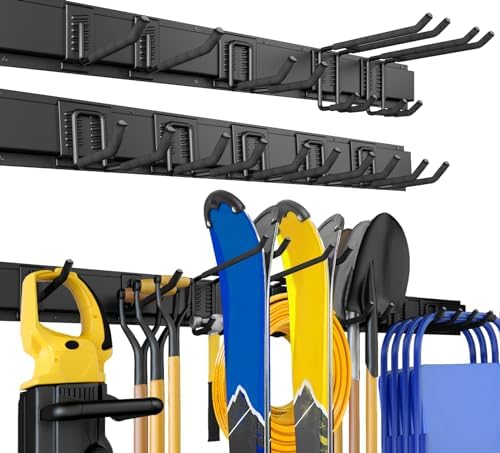
This is the backbone of my garden zone. It's a 48-inch wall-mounted organizer rated for 440 lbs, and it holds shovels, rakes, hoes, and the long-handled stuff that always ends up leaning against a wall and falling over.
I mounted it on studs in about 20 minutes. The steel is thick, the hooks are spaced well, and the whole thing feels solid when you load it up.
I've got a post-hole digger, two shovels, a rake, and a broom hanging on mine. Nothing has moved in six months.
The price is ~$65, which is fair for what you get. Buyers complain about the hooks being too narrow for some tools, and that's a real issue. My leaf blower doesn't fit. But for standard garden tools, it's perfect. The key is measuring your tool handles before you buy.
Flaws but not dealbreakers: The included hardware is decent but not great. I replaced the screws with heavy-duty ones from my drawer. And the hooks are fixed, so you can't rearrange them. This is for the person who has a collection of long-handled tools and wants them off the floor for good.
Upgrade pick: 64" Garage Wall Tool Organizer
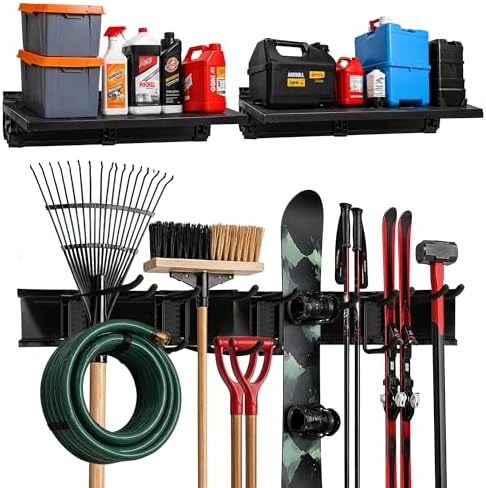
Garage Tool Organizer Wall Mount
This is the big one. A 64-inch wall organizer rated for 900 lbs, and it's overkill for most garages. But if you have a serious tool collection, this is the one. I installed one in a client's garage who had every tool known to man, and we loaded it with shovels, axes, a sledgehammer, and a snow blower attachment.
It didn't even creak. The steel is heavy gauge, the finish is epoxy, and the hooks are spaced perfectly for long tools.
At ~$90, it's more expensive than the 48-inch models, but you're getting more than double the capacity. Buyers report the same thing I found: this thing is a tank. One guy said he hung his entire landscaping business on it. I believe him.
Flaws but not dealbreakers: It's long. If your garage wall isn't at least 64 inches of clear stud space, it won't fit. And the mounting holes are pre-drilled, but you'll want a level and a stud finder. This is for the person who treats their garage like a workshop and needs serious storage for serious tools.
Budget pick: Garage Wall Organizer 48" Double Hooks
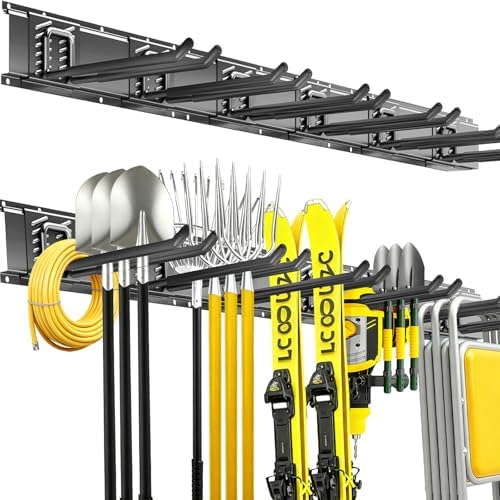
This is the budget option for the garden zone. It's a 48-inch organizer with double hooks and 30 positions, which means you can hang a lot of stuff in a small space. The capacity is lower than the UUP, and the hooks are shallower, so bulky items are a tight fit. But for ~$55, it's a solid option if you're on a budget.
 Visit on Amazon →
I tested this in a client's garage, and it held up fine with standard garden tools. The double hooks are nice for hanging two of the same tool side by side. But the shallow depth means my post-hole digger didn't fit well. It worked, but it was tight. Buyers report the same thing. The finish is decent, but not as thick as the UUP.
Visit on Amazon →
I tested this in a client's garage, and it held up fine with standard garden tools. The double hooks are nice for hanging two of the same tool side by side. But the shallow depth means my post-hole digger didn't fit well. It worked, but it was tight. Buyers report the same thing. The finish is decent, but not as thick as the UUP.
Flaws but not dealbreakers: The hooks are fixed, and the capacity is lower than the UUP. If you have heavy tools, spend the extra ~$10. This is for the person who wants to organize their garden tools without spending a lot of money.
The competition
The Sports Equipment Organizer is a niche product. It's built for balls, bats, helmets, and the stuff that collects in a corner. It works fine for that, but it's not versatile enough for a general garage.
The 49.5-inch Garage Tool Organizer is fine, but it doesn't have the capacity or the hook spacing of the UUP.
And the 48-inch Heavy Duty organizer is a good product, but it's priced too close to the UUP to be a better value.
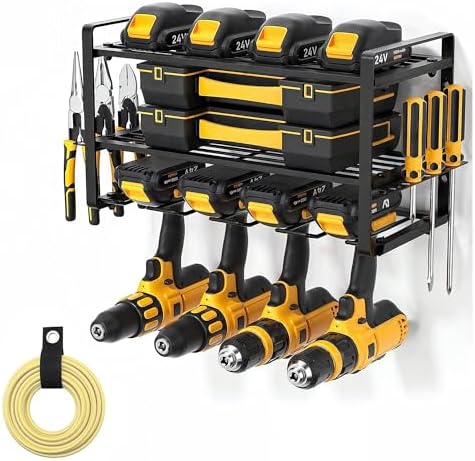
The 64-inch UUP model is solid, but the 900-lb capacity option is the better value for the money. The Power Tool Organizer is a different product entirely, built for drills and small tools, so it's not a direct competitor.
The assembly reality
Here's the thing about assembly. The EKJ took me an hour. The UUP took 20 minutes. The 64-inch organizer took 30 minutes. If a shelving unit takes more than an hour, the instructions are garbage. I've spent two hours with a unit that had no numbered parts and an instruction sheet that looked like a photocopy of a photocopy.
Stripped two bolts, ended up with three extra pieces, and a shelf that wobbled until I anchored it. Read the reviews for assembly complaints before you buy.
If people are angry about the instructions, trust them.
The anchoring rule
Every shelf wobbles if you don't anchor it. That's physics. But if it wobbles when it's bolted to the wall, you bought a bad unit. The EKJ needed anchoring. The UUP and the other wall organizers are anchored by design. Plan for it. Buy a stud finder, use heavy-duty screws, and don't skip this step. I've seen a shelf come down because someone skipped the anchors. It wasn't pretty.
The rust problem
If you live in a humid climate, wire shelves will betray you. I've seen it happen. Six months in, that orange dust starts appearing on anything that touches the shelves. The epoxy finish on the EKJ and the UUP holds up. The cheaper wire racks under ~$50 don't. Their finish is thin and it rusts. Spend the extra money on epoxy-coated or steel with a real finish. It's worth it.
The bottom line
Organize by zones. Buy for the zone. The EKJ handles bulk storage. The UUP handles garden tools. The 64-inch organizer handles serious tool collections. The budget options work if you're careful. And anchor everything to the wall. If you do that, your garage will still be standing in five years. Mine is.