Related: Garage Wall Storage Systems That Actually Stay Up
Every heavy duty garage shelving conversation in my truck starts the same way: what is the wall, and what is going on the shelf. Weight ratings are measured in a lab with perfect mounting, and your drywall is not a lab. A shelf anchored into drywall alone is a shelf that is coming down, so the first job is finding studs, and the second job is picking a unit that matches the load you actually own.
I have spent twenty years building and finishing garages, and the last eight of those specializing in storage systems. Four units make my shortlist this season: a bolt-together steel shelving kit, two lockable steel cabinets in different footprints, and a rolling shelf that moves when you need the floor back. None of them is the right answer for every garage. Which one you buy depends on whether you need open shelving, locked storage, or something you can wheel out of the way.
Here is how each one earns its place, and what to check before you drill a single hole.
Best Overall: Koova Universal Garage Shelving Kit
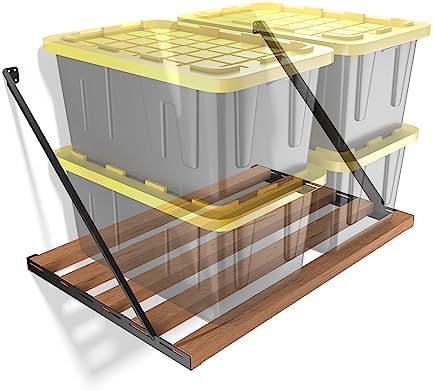
Open shelving is the backbone of a garage, and this is the unit I would start a client's wall with. It is a universal kit, meaning it is built to be configured around your space instead of the other way around, and Koova rates it at 600 lbs. of support. That is a real number for a shelving kit, but the rating only means something if the mounting does. Get it into studs, or into a proper wall panel system, and that load is something you can live with. Hang it off drywall plugs and the rating is fiction.
Made in the USA matters to me for a practical reason: consistent hardware and replacement parts. Bolts that strip before they are tight are one of my pet peeves, and hardware quality is where cheap kits give themselves away.
The customization is the point. Garage storage is never a one-size layout. You have a water heater, a trash can, a bike, and a stack of totes, and the shelves need to move around those, not the other way around. If you want one system to carry the bulk of your storage, this is where I would spend.
Best Lockable Cabinet: Letaya 72-Inch Steel Storage Cabinet
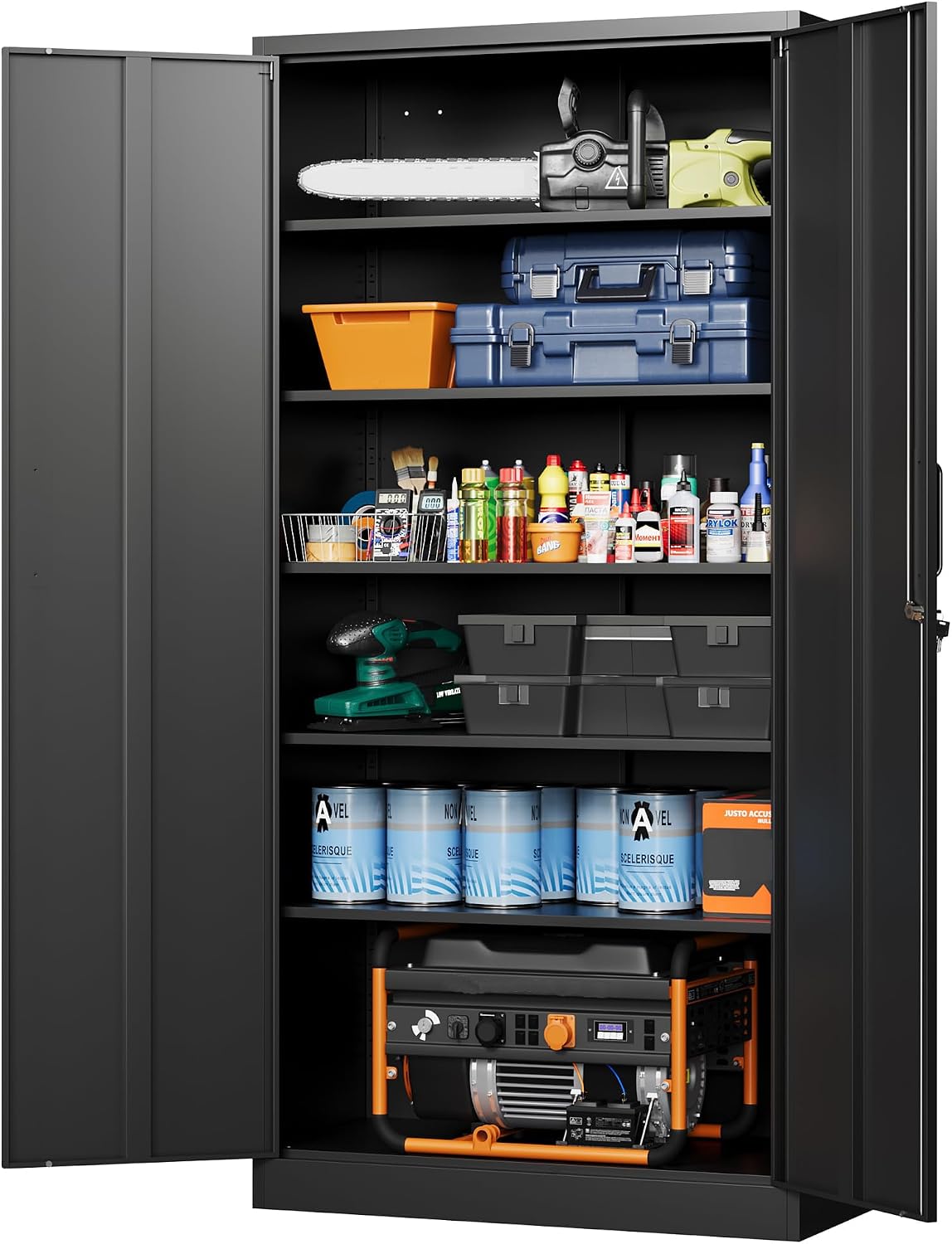
Not everything in a garage wants to sit in the open. Paint, solvents, power tools, and anything with a blade on it belongs behind a door with a lock on it, and this 72-inch steel locker is built for that job. Five adjustable shelf layers let you set heights around what you actually store instead of fighting a fixed layout.
The lock matters more than people give it credit for. A cabinet with a lock is a cabinet you can leave in a garage that doubles as a shop, and it is the difference between storing chemicals safely and storing them hopefully.
The trade-off with tall steel cabinets is assembly and anchoring. Anything 72 inches tall has a tip-over risk if it is not secured to the wall, and the taller and narrower the unit, the more that matters. Anchor it into studs near the top, and keep the heavy items on the bottom shelves. That is not a knock on this cabinet. It is physics, and it applies to every tall locker on the market.
Best Wide Cabinet: SISESOL Wide and Deep Metal Storage Cabinet
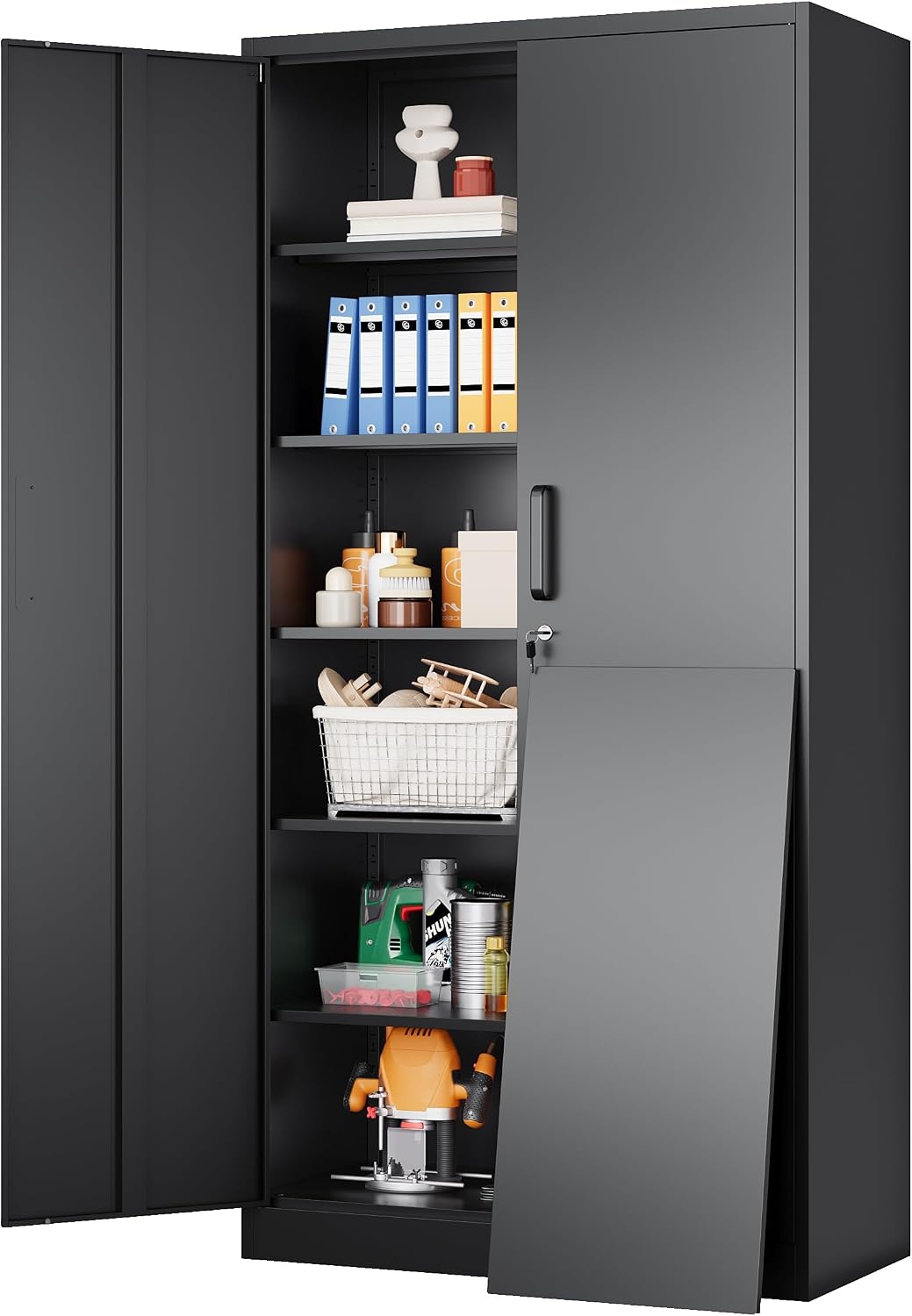
Same idea, different footprint. This one is 72 by 36 by 18 inches, which makes it substantially wider and deeper than a standard locker. That extra depth is what makes it useful for the things that do not fit anywhere else: a miter saw, a shop vac, big jugs of antifreeze, the cooler you use twice a year.
Two doors, five adjustable shelves, and a lock. The wide format gives you real usable shelf area per level instead of a narrow column that only fits one tote deep.
Deep cabinets have one installation catch. They are heavy, and a deep cabinet that is not anchored is a lever waiting for somebody to hang on the door. Anchor through the back into studs, keep the heavy items on the bottom two shelves, and put the light, awkward stuff up top.
If you have the floor space, this is a lot of storage per square foot. If you do not, the narrower locker is the better call. Measure your floor before you order, because a 36-inch-deep cabinet eats a parking space fast.
Best Rolling Option: Sakugi 5-Tier Storage Shelves with Wheels
Not every shelf should be permanent. This 5-tier unit measures 33.1 by 12.6 by 73.5 inches, and it rolls, which changes what it is for. A rolling shelf is the unit you pull out when you are working on the car, load with the tools for that job, and push back when you are done.
The footprint is narrow at 12.6 inches deep, so it fits against a wall, beside a water heater, or in the gap between the garage door track and the corner. That is real estate most garages waste.
Two honest cautions. First, wheels and weight ratings do not mix the way fixed feet and ratings do. A rolling shelf is for light and medium loads, not for a stack of tile or a transmission. Second, casters roll until they hit a slope, and garage floors slope toward the door by design. If you load it heavy, block the wheels.
Treat it as a mobile work cart and it earns its keep. Treat it as permanent heavy storage and you will learn why I ask about the floor first.
How I judge garage shelving
Every unit gets the same four questions, and none of them involve the box copy.
Load path. Where does the weight go? From the shelf, into the bracket, into the upright, into the wall, into a stud, into the foundation. If any link in that chain is drywall alone, the shelf is coming down eventually. That is why I ask about wall type before I recommend anything.
Mounting hardware. "Wall anchor included" usually means a drywall plug, and a drywall plug is not a structural anchor. I want lag bolts into studs, or a wall panel system that spreads load across multiple studs.
Install reality. I time installs. A kit that takes an afternoon is fine. A kit that takes a weekend because the hardware fights you is a kit you will resent. Bolts that strip before they are tight are the fastest way to ruin a Saturday.
Garage conditions. Kansas City hands a garage a hundred-degree summer, a single-digit winter, and humidity swings in between. Powder coat that flakes after one winter is the first sign of a cheap unit, and it is the failure I see most on budget steel.
What the specs tell you and what they do not
A 600 lb. rating on a shelving kit is a claim about the unit, not about your wall. Read it as the ceiling of what the hardware can take when it is mounted correctly, then derate it for reality: drywall, a hollow wall, a hot garage, a load that shifts every time you pull a tote off the front.
Steel cabinets are the same story from a different angle. The number that matters is not the shelf count, it is the gauge and the anchoring. Two doors and five adjustable shelves is a layout, not a strength rating, and a tall cabinet that is not strapped to a stud wall is a hazard with shelves in it.
Height is the spec people ignore. A 72-inch cabinet and a 73.5-inch rolling shelf both use vertical space, and vertical space is the cheapest storage in a garage. Floor space is expensive. Vertical space is free.
Depth is the other one. A 12.6-inch-deep rolling shelf tucks into gaps a 36-inch-deep cabinet cannot touch. A 36-inch-deep cabinet swallows things a shallow shelf never will. Match depth to what you are storing, not to what looks impressive on the listing.
And no rating survives a bad anchor. That is the whole game.
The garage shelving reference table
| Unit | Type | Shelving | Footprint | Best for |
|---|---|---|---|---|
 Visit on Amazon → Visit on Amazon →Koova Universal Garage Shelving Kit |
Open steel kit | Customizable | Wall mounted | Bulk open storage, 600 lbs. rated |
 Visit on Amazon → Visit on Amazon →Letaya Metal Garage Storage Cabinet with Lock, 72 Inch |
Locking steel cabinet | 5 adjustable layers | Tall locker | Tools, paint, chemicals behind a lock |
 Visit on Amazon → Visit on Amazon →SISESOL Wide and Deep Metal Storage Cabinet, 72x36x18 |
Locking steel cabinet, wide and deep | 5 adjustable shelves | 72 x 36 x 18 in | Miter saw, shop vac, bulky gear |
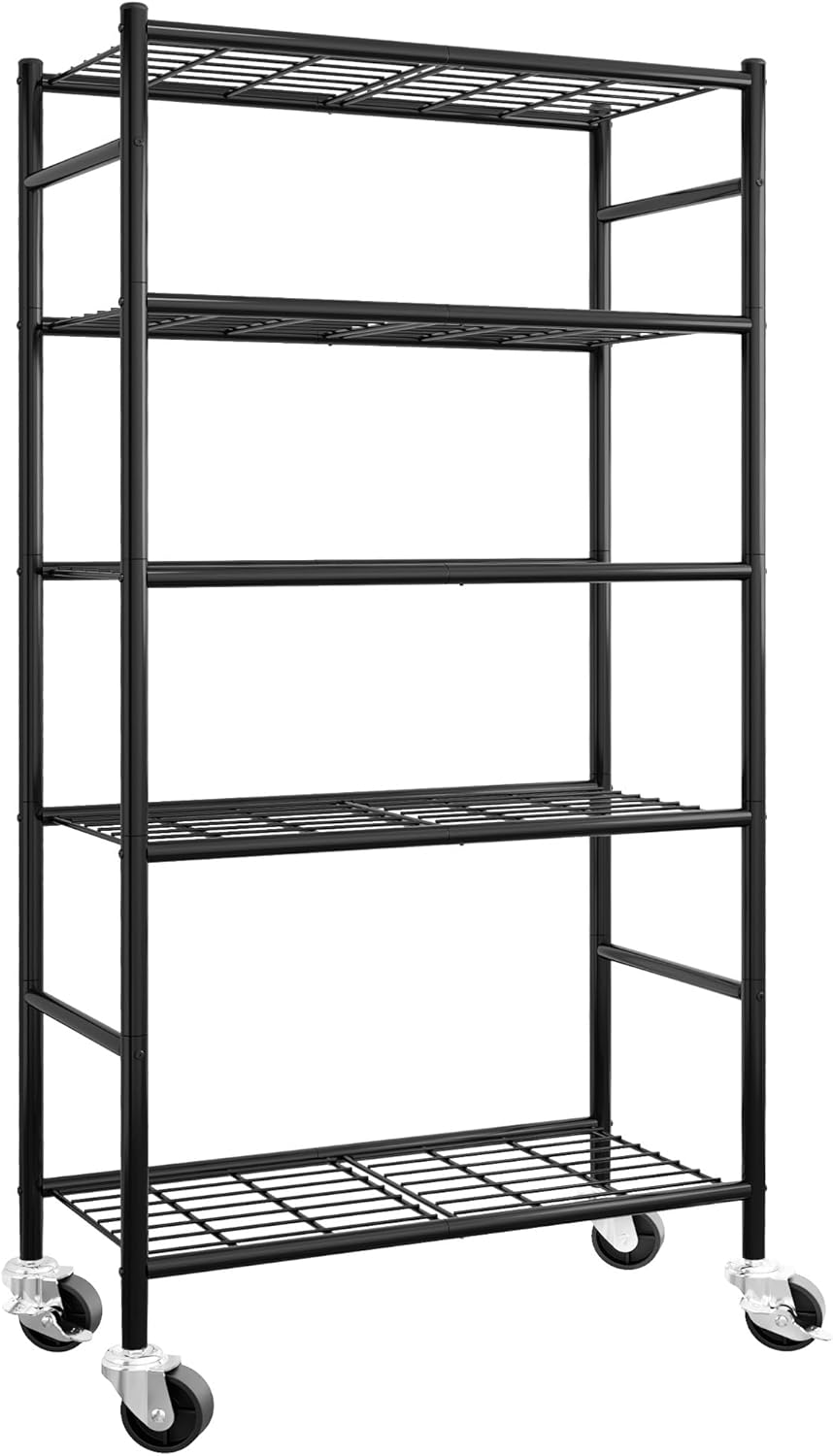 Visit on Amazon → Visit on Amazon →Sakugi 5-Tier Storage Shelves with Wheels |
Rolling open shelf | 5 tiers | 33.1 x 12.6 x 73.5 in | Mobile cart, narrow gaps, light to medium loads |
Check current Amazon price on each listing before you commit, because these move around.
Should you buy the Koova Universal Garage Shelving Kit?
Yes, if you want one system to carry the bulk of your storage. The 600 lb. rating, the configurability, and the made-in-USA hardware are the reasons. Mount it into studs or a wall panel, and it does what the label says. Mount it into drywall alone and you have built a shelf that is on a schedule.
Should you buy a lockable steel cabinet?
Yes, for anything you want behind a door. The Letaya is the tall, narrow play: five adjustable layers, a lock, and a footprint that fits a tight wall. The SISESOL is the wide and deep play: 72x36x18, two doors, five adjustable shelves, and enough interior room for a miter saw or a shop vac.
Pick the Letaya when floor space is tight and the load is tools and chemicals. Pick the SISESOL when you have the depth to spare and bulky gear to hide. Both need anchoring into studs at the top. Neither is a substitute for a wall panel if you plan to hang things on the outside of it.
Should you buy the Sakugi 5-Tier Storage Shelves with Wheels?
Yes, as a cart. It rolls, it is narrow, and it uses vertical space in a gap nothing else fits into. Keep the load light to medium, block the wheels when it is heavy, and stop thinking of it as permanent shelving.
The real decision is not which single unit wins. It is which combination fills your walls without filling your floor. For most garages I work in, that means one open shelving system, one lockable cabinet, and one thing that moves. Check current Amazon price, confirm your wall type, and buy the unit that matches the load you actually own.