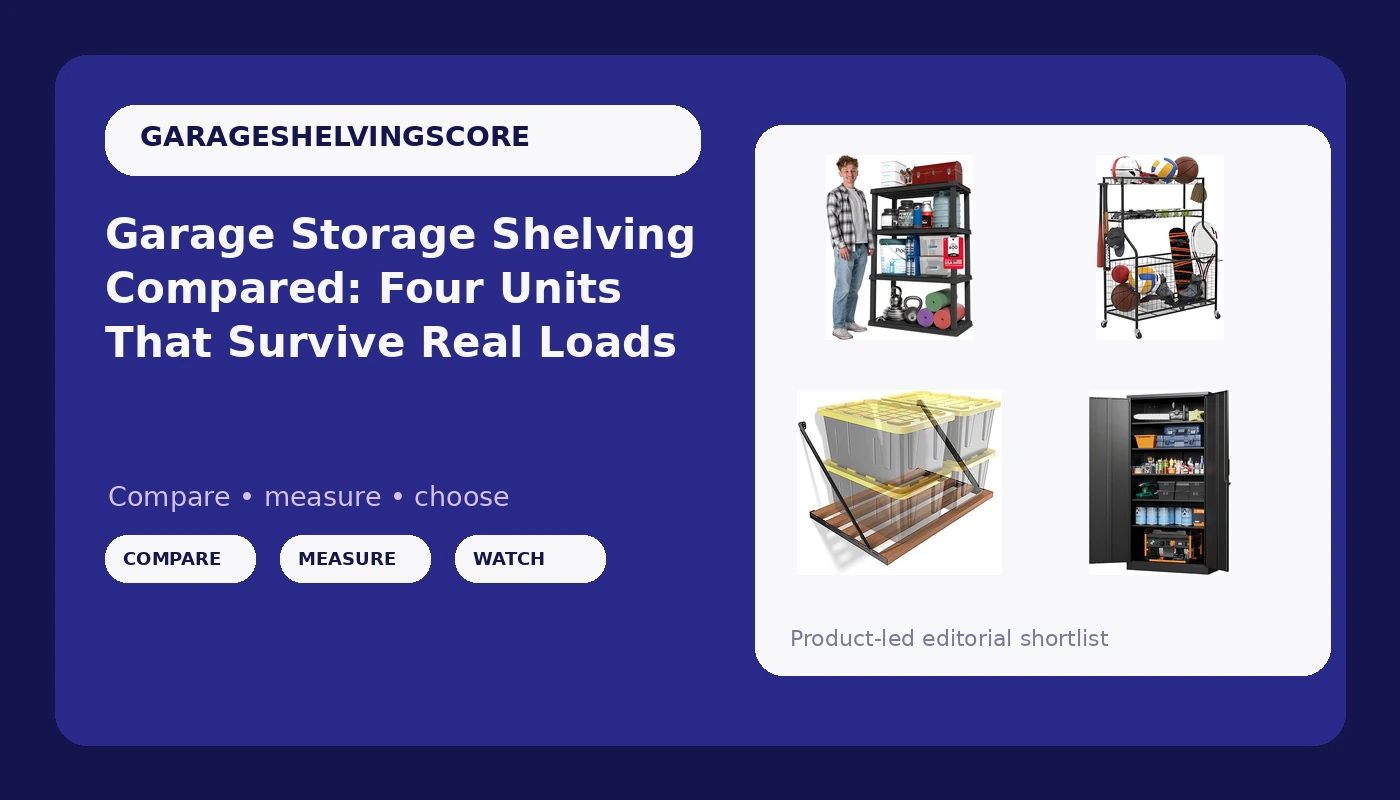
Every garage I've walked into in the last 20 years has the same problem: the stuff showed up first, and the storage was an afterthought. This garage storage shelving comparison is the sheet I'd hand a homeowner before they spend a Saturday drilling holes in drywall, because the four units below solve four genuinely different problems. One is plastic and inexpensive, one holds every ball in the house, one is a shelving kit with a 600-pound support rating, and one is a locking steel cabinet. Buy the wrong one for your wall and you'll spend two years working around it, and the car still won't fit.
Related: Wall Panels Vs Freestanding Shelving For Garage Tools
The best pick for most garages here is the Koova Universal Garage Shelving Kit, because it is the only unit in this group that leads with a real load rating, and it's built in the USA. That said, "best" depends entirely on what you're putting on it. A ball rack is not a shelf. A locking cabinet is not a shelving kit. Here's where each one earns its place, and where each one falls down.
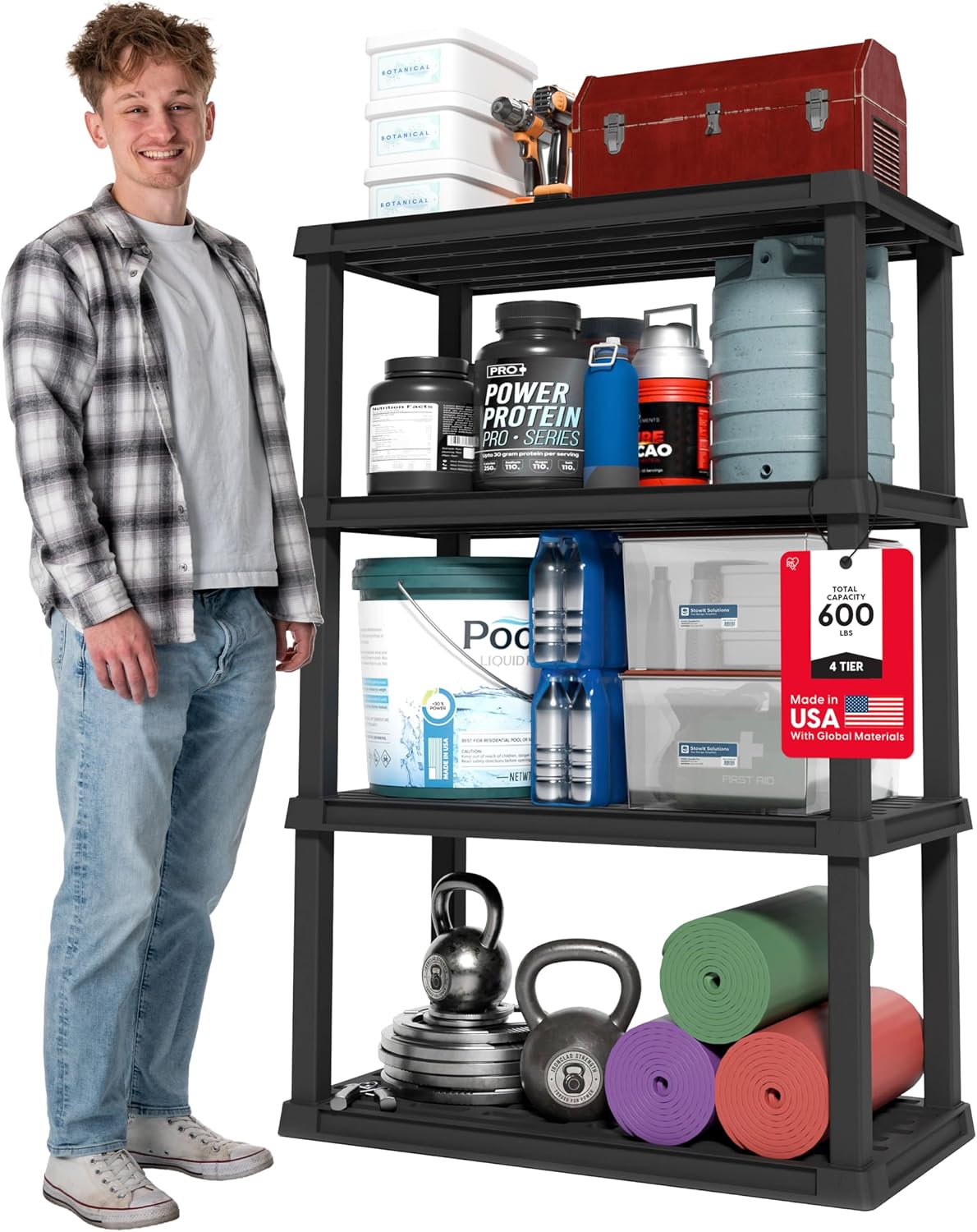
IRIS USA Plastic Storage Shelves
Simplest way to add vertical storage in a 36-inch wall bay, and it's made in the USA
It's plastic, so it lives in the light-duty lane. A loaded toolbox on it is a bet
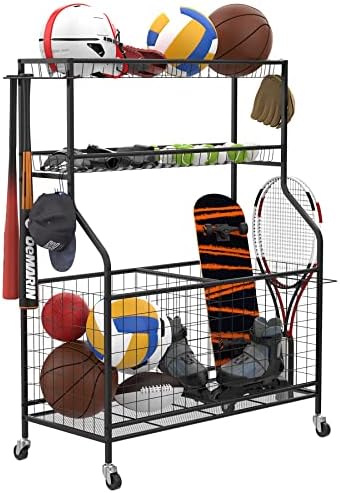
WALMANN Garage Balls and Sports Equipment Organizer
Turns a rolling pile of balls and sports gear into one vertical column and gives floor back
It's a specialty rack. It won't hold totes, tools, or paint
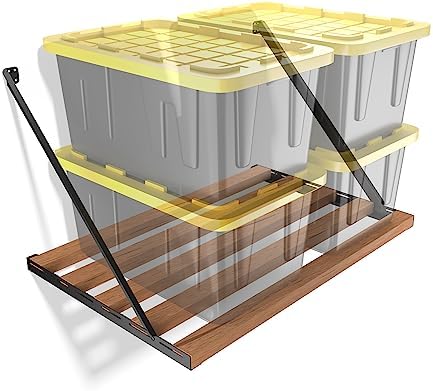
Koova Universal Garage Shelving Kit
600-pound support rating, customizable layout, made in the USA
You still have to plan the wall and find the studs before that rating means anything
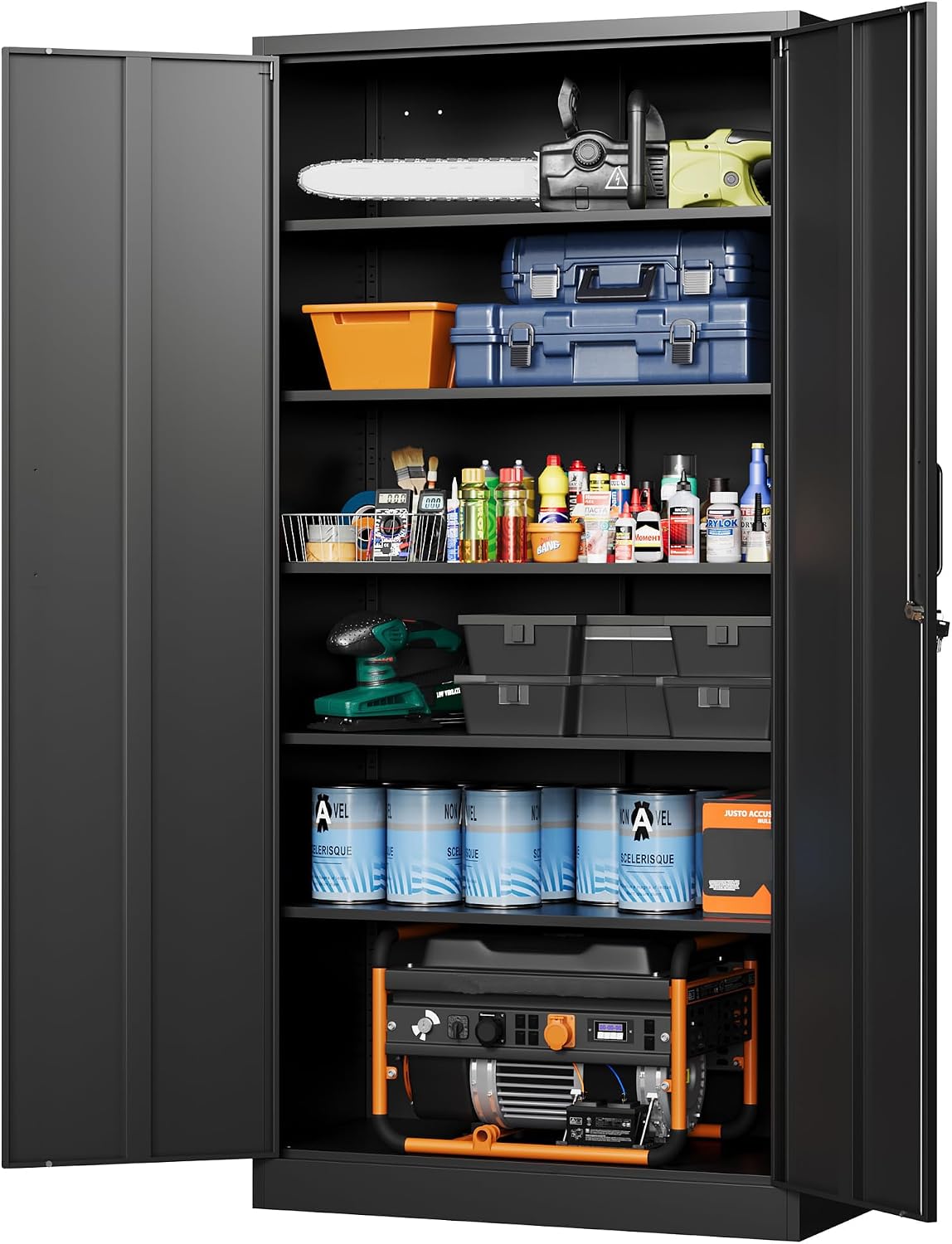
Letaya Metal Garage Storage Cabinets with Lock
72 inches tall, five adjustable shelves, and a lock that keeps tools and chemicals behind a door
It's a cabinet, so it costs floor footprint and doesn't flex the way a kit does
Prices and availability were captured from Amazon Creators API and may change.
How I judge shelving before I judge the box
Weight ratings are measured in a lab with perfect mounting. Your drywall isn't a lab. So when a new unit crosses my bench, I start with three questions: what does it claim to hold, what does it mount to, and what happens in February when the garage has been sitting at 20 degrees for a week and the finish has to survive it.
The second question is the one that decides everything. A shelf that's anchored into drywall alone is a shelf that's coming down, and "wall anchor included" usually means a drywall plug, not a solution. Tell me your wall type and I'll tell you how I'd hang it. If you don't know your wall type, that's step one, before you order anything.
I also won't quote you an install time I haven't timed, which is why you won't find "done in an hour" anywhere in this article. What I will tell you is which of these four units has a job in a real garage, and what that job costs you in wall space, floor space, or both.
Plastic shelving: the light-duty lane
Plastic shelving has its place: light stuff, high up. This IRIS USA unit measures 56 inches tall, 36 wide, and 18 deep, which is a bay size I plan constantly, because 36 inches fits between a garage door track and the side wall in a lot of two-car garages, and 18 inches of depth doesn't swallow the parking space. It's made in the USA, which matters to me more than it used to.
The moment you put a tool box on it, you've made a bet. Plastic flexes, plastic gets brittle in a cold snap, and a shelf that sags stays sagged. That's not a knock on this specific unit; it's a rule about the material. Use it for holiday totes, empty coolers, camping gear, and the kids' outgrown stuff you swear you'll sell. Keep the tool chest on something that was rated for it.
The other thing plastic buys you: it's light enough that one person can position it without help, and you can move it when you rearrange the garage next spring. Steel doesn't forgive that as easily.
The ball rack: floor space is the real prize
Sports gear is the worst category in any garage because it doesn't stack, it doesn't sit still, and it multiplies every season. Balls roll under the car. Bats and mitts end up in a milk crate that nobody wants to dig through. A dedicated ball storage rack solves that by converting chaos into a vertical column.
Here's the honest framing: this is not shelving. Don't buy it expecting to hold paint cans or a chop saw. What it does is reclaim floor space that a pile of gear has been renting, and in a two-car garage, floor space is the only currency that matters. If your kids play three sports and your garage floor looks like a sporting goods store exploded, this is the cheapest fix in the whole article.
The trade-off is specialization. Every square foot you give the ball rack is a square foot that isn't holding a tote. If your garage problem is sports gear specifically, that's a great trade. If your problem is general clutter, buy shelving first and add this later.
The shelving kit with a real number on it
This is the one I'd put in a client's garage first. The Koova Universal Garage Shelving Kit carries a 600-pound support rating, it's customizable, and it's made in the USA. It's the only unit in this comparison that starts the conversation with a load number instead of a color.
Treat that 600 pounds as the starting line, not the finish. My contractor test is simple: load it with what the label says, then double it, then leave it for a year and see what the brackets think. A rating like this only holds if the mounting does, and the mounting is your wall, not the box. Find the studs, use hardware rated for the load, and that number becomes real. Skip that step and you've built a very sturdy pile on the floor.
Customizable is the part people underestimate. A fixed shelf height is a decision you make once and regret forever. A kit you can reconfigure is a decision you get to revisit when your storage needs change, which they will.
The locking cabinet: security is a storage feature
A 72-inch steel cabinet with five adjustable shelves does two jobs at once. It stores vertically, which is the whole game, and it locks, which almost nothing else in a garage does. Paint, solvents, and anything sharp behind a door that closes and stays closed is a different category of storage than a shelf.
Five adjustable shelves means the spacing changes when your stuff changes, and that matters more than people think. The gap that fits a case of oil doesn't fit a circular saw, and a cabinet you can reconfigure is a cabinet you keep using instead of abandoning.
The trade-offs are real and worth saying out loud. It's a cabinet, so it takes floor footprint, which means it wants a corner or a wall end, not the middle of the bay. It's steel, which means it's heavy enough that you want to decide where it lives before you slide it there. And it isn't a shelving kit: you don't get to spread it across a wall. If your garage needs both volume and security, you may end up with a cabinet for the dangerous stuff and a kit for everything else.
Wall type decides more than the product does
I can't tell you which fastener to use without knowing what's behind your drywall, and neither can a product page. Studs at 16 or 24 inches on center, poured concrete, block, or bare drywall: each one gets a different answer, and getting it wrong is how a shelf ends up on the hood of your car.
The temperature swing is the other variable nobody mentions. Kansas City gives a garage a full winter of freeze and thaw, and I've watched cheap powder coat fail long before a weld did. Whatever you buy, look at the finish and the hardware, because those are the parts that meet the weather.
Where each one loses
The IRIS USA shelves lose the moment you overload them, because plastic doesn't warn you, it just sags. The WALMANN rack loses on versatility, because it holds one category of thing extremely well and nothing else. The Koova kit loses if you're not willing to find studs and plan the wall, because that's where its rating lives. The Letaya cabinet loses on flexibility, because it takes floor space and stays in one spot.
None of those are dealbreakers. They're just the reasons you buy one instead of the other.
Which one for which garage
If your garage is drowning in light overflow, start with the plastic shelves. If it's drowning in sports gear, start with the ball rack. If you want a wall that can take a real load and you're willing to do the mounting right, the Koova kit is the pick. If you've got tools, chemicals, or anything you don't want accessible, the locking Letaya cabinet earns its corner.
One more thing, and I mean this as practical advice, not a joke: the best storage system is the one your spouse doesn't hate. Organization that gets vetoed doesn't work, and a wall of shelving that makes the garage feel cramped will get vetoed. Plan the layout with the person who parks in there.
Measure your wall, find your studs, then buy. That order saves more money than any sale.