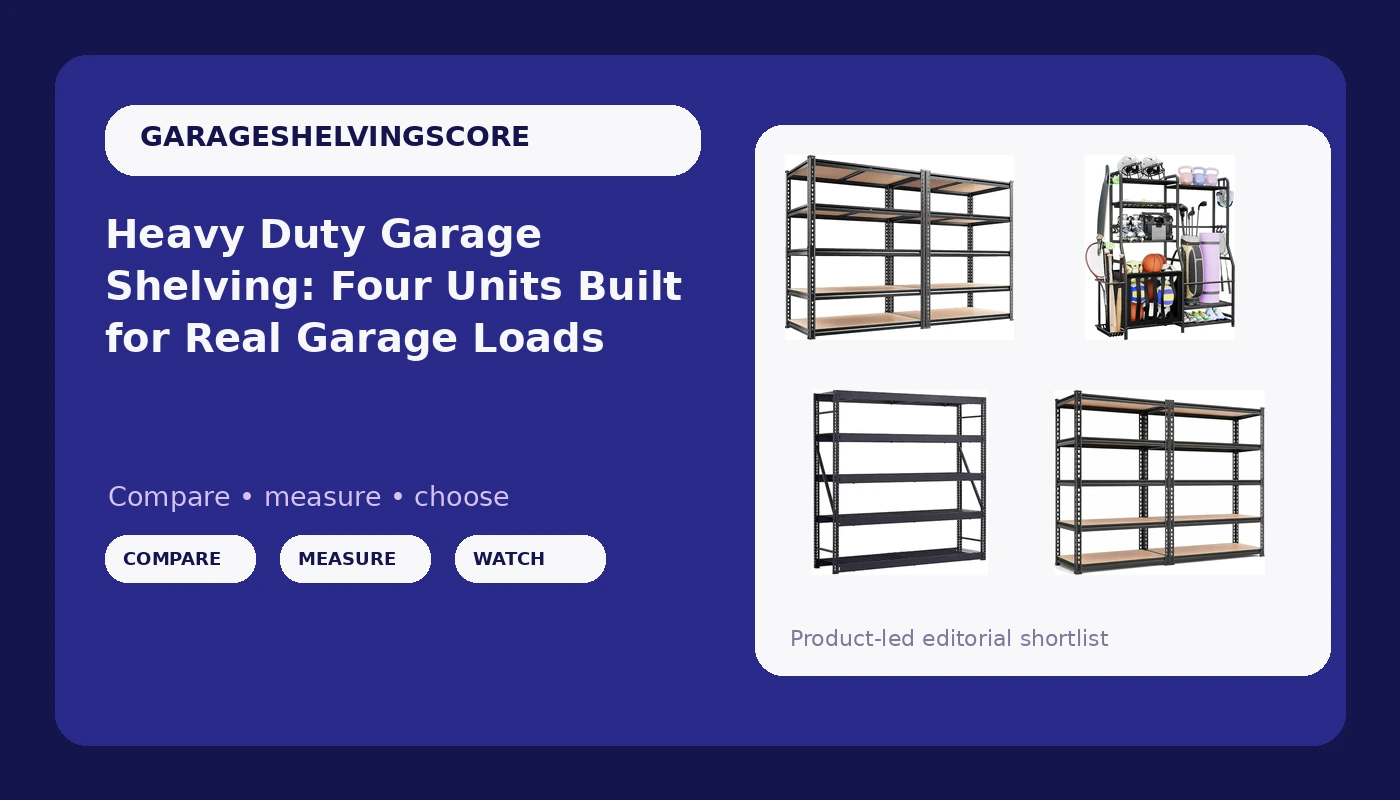
I have spent twenty years building and finishing garages around Kansas City, and the last eight of those years doing nothing but storage systems: shelving, ceiling racks, wall panels, workbenches. I have installed units in garages the owner swore would never be organized, and I have watched a few of those same shelves come down because somebody trusted a number printed on a box instead of the wall behind it. This comparison covers four heavy duty garage shelving options that keep showing up in the same search results, and they do four genuinely different jobs.
Here is the short version. The REIBII two-pack is the best heavy duty garage shelving for most garages, because it puts 2,400 pounds of rated capacity per unit on your wall at a two-pack price. The Husky unit is the better shelf if budget is not the constraint and you want something that looks like it belongs in a working shop. The other two do narrower jobs, and I will be specific about which.
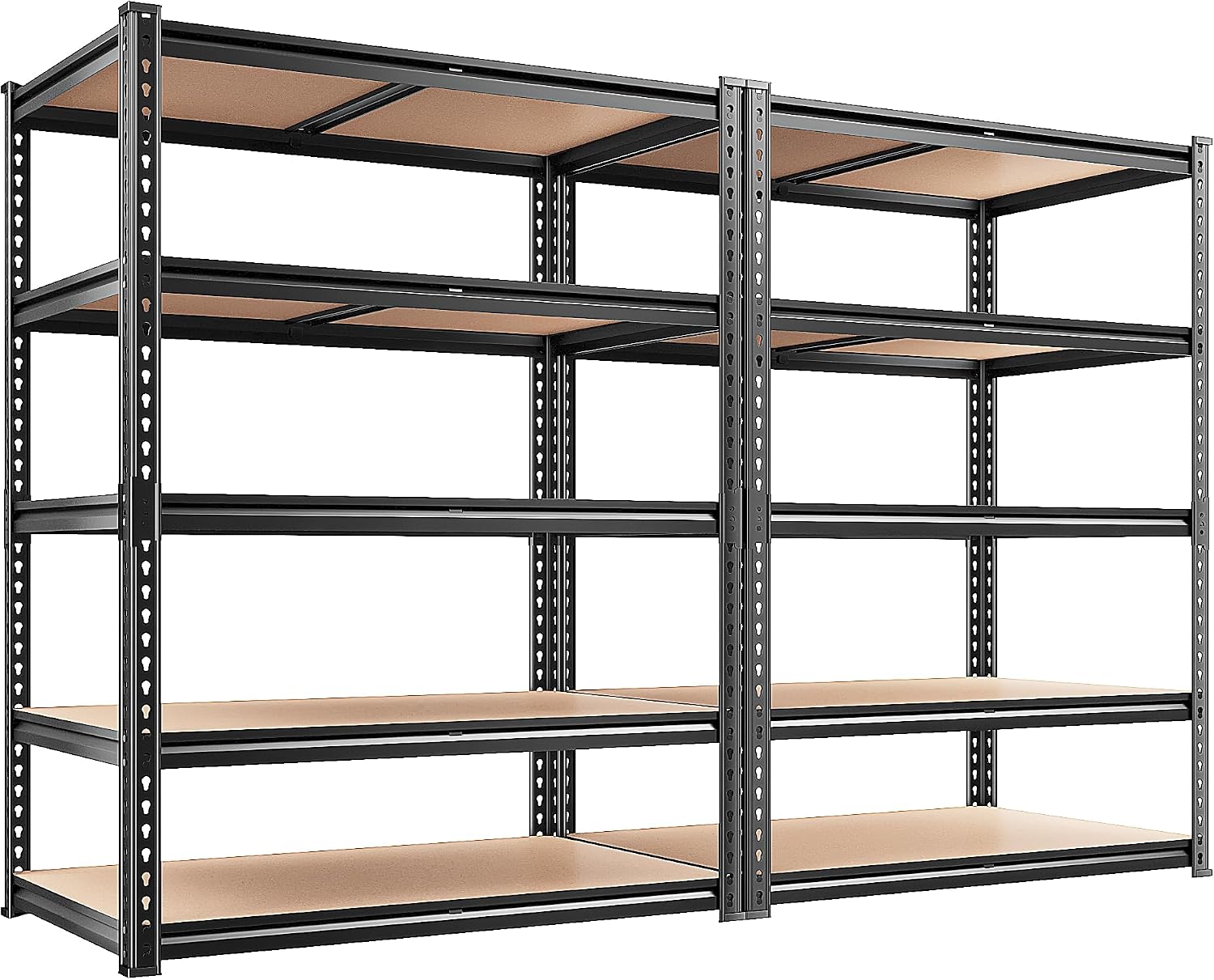
REIBII 2 Pack Garage Shelving, 2400LBS Each, Heavy Duty Storage Shelves
The highest rated capacity in this group per dollar, two units in one box, steel that survives a garage
The tall uprights need a real anchor plan, and two units means committing a whole wall
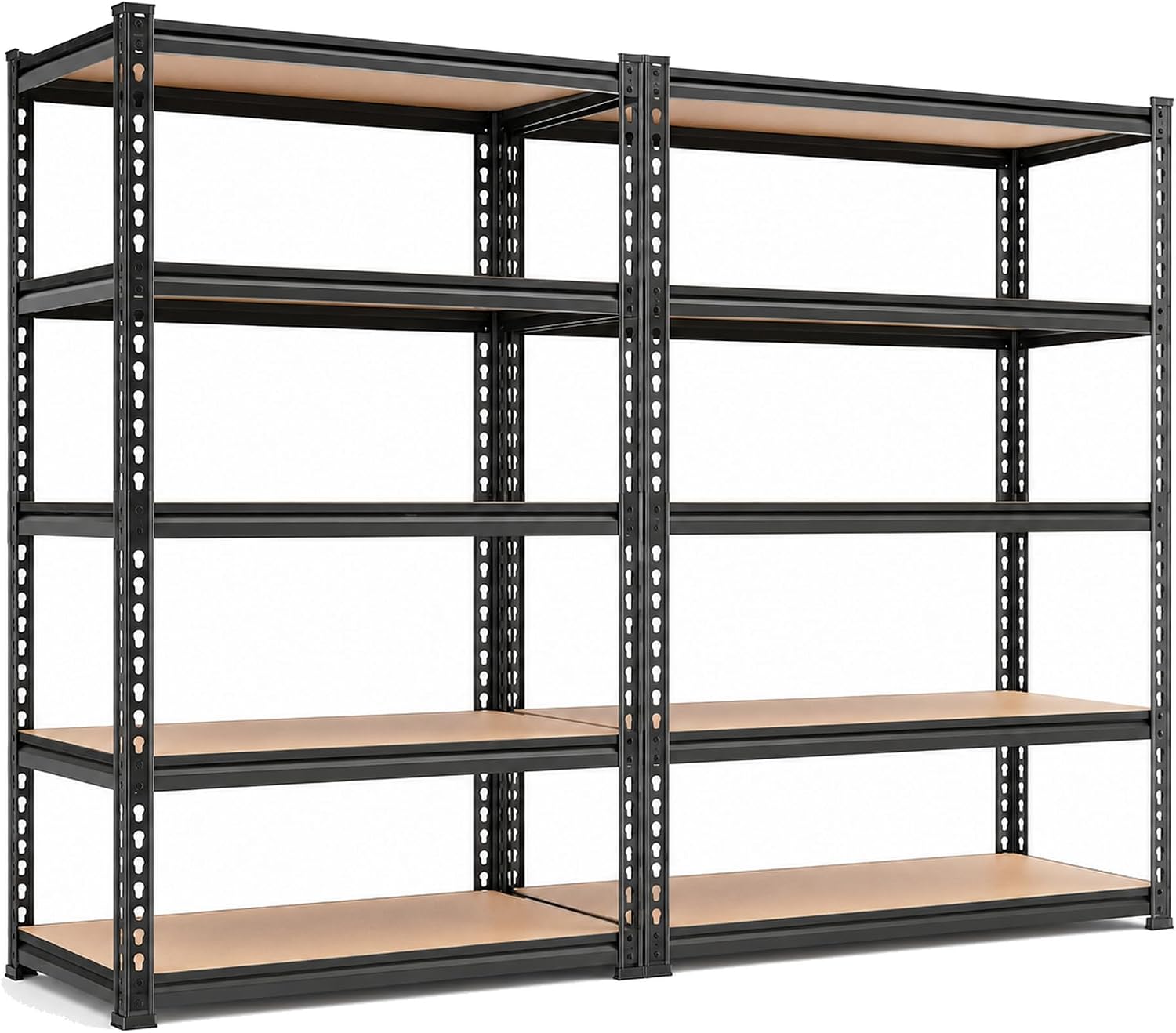
2 Pack Garage Shelving, 36"W x 16"D x 72"H, 5-Tier Storage Rack
Narrow 16 inch depth fits walls a deeper rack cannot, five tiers of usable shelf height
Shallow decks mean big totes overhang, so it is a light and medium load rack in practice
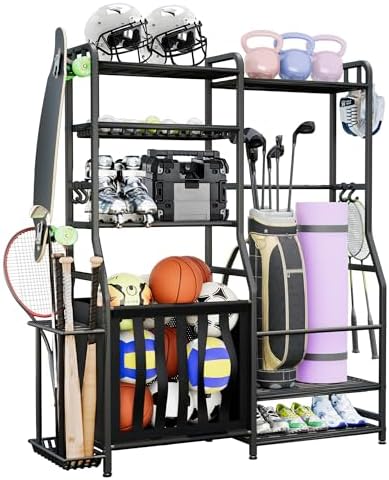
Faesun Sports Equipment Organizer, Heavy Duty Ball Storage Rack with Basket & Hooks
Solves the ball, bike helmet, and golf bag pileup that shelving never fixes
It is an organizer, not a load-bearing shelf. Do not plan a garage around it
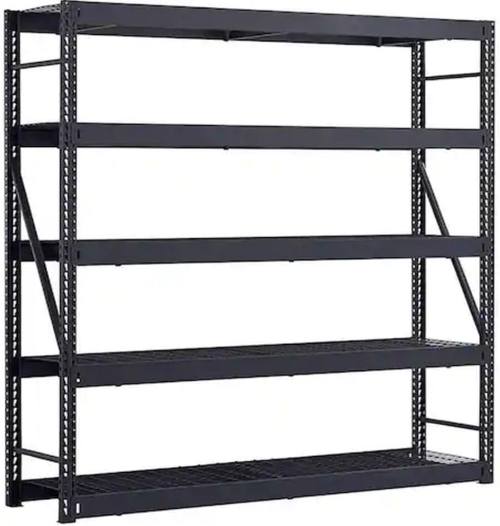
Husky Heavy Duty Industrial Metal Storage Shelving Unit, Black, 4 Adjustable Shelves, 1000 lbs Capacity, Powder Coated Steel
Industrial build, four adjustable shelves, powder coated steel, the buy-once option
Costs more than the other three combined, and it is heavy enough that moving it is a two-person job
Prices and availability were captured from Amazon Creators API and may change.
How I judge a shelving unit
Four things, in order. Load path first: where does the weight go from the deck, down the upright, and into the floor or the wall. Second, whether a homeowner with normal tools can install it in an afternoon without inventing new swear words. Third, how it handles a garage that swings from single digits in January to triple digits in August. Fourth, whether I would put it in a paying client's garage.
That last question kills more products than the other three combined. A rack can be strong, cheap, and easy to assemble and still be something I would not hang a client's winter tires on.
What a weight rating actually means
The REIBII listing states 2,400 pounds each. The Husky listing states 1,000 pounds capacity. Those numbers are not comparable the way you think they are, because a rating is only as good as the mounting behind it.
A rating measured at the bracket is not a rating for the shelf. A rating measured with the unit bolted into solid blocking is not a rating for your drywall. When I see a capacity number, I want to know three things: was it distributed load or a point load, was it static or after a season of shifting, and what was it fastened to.
Distributed load means evenly spread weight across the deck. Point load means one heavy thing in one spot, like an engine block or a tile saw. A rack rated for 2,400 pounds of evenly spread tote bags is not the same rack that holds a 200 pound cast iron machine in the middle of a shelf. Steel deflects where you concentrate the load. That is physics, not marketing.
So the honest way to read these ratings: treat the published number as a ceiling for perfect conditions, then plan your actual loads at half of it. That gives you margin for the bracket, the anchor, the wall, and the day your kid drops a basketball on the top shelf.
The REIBII two-pack: the value pick
REIBII 2 Pack Garage Shelving, 2400LBS Each, Heavy Duty Storage Shelves is the unit I would spec for the average two-car garage. Two racks in one purchase, 2,400 pounds of stated capacity per rack, and steel that is thick enough to hold a straight line under load.
The reason it wins is not the number. It is that the number comes attached to a two-pack. Most garages do not need one shelf, they need a wall of them, and buying two identical units gets you matched heights and matched depth without a second shopping trip.
What it loses on is the anchor plan. Tall uprights want to be tied into something. If your garage wall is finished drywall with no blocking, you are either finding studs or you are planning a different install. Two units also means you have committed a full wall to one layout, so measure the space before the boxes arrive, not after.
The five-tier 36 inch rack: the starter shelf
The 2 Pack Garage Shelving, 36"W x 16"D x 72"H, 5-Tier Storage Rack is the narrow, tall option. Thirty-six inches wide, sixteen inches deep, five tiers, seventy-two inches tall. That sixteen inch depth is the whole personality of this rack.
Sixteen inches deep fits where a twenty-four inch rack will not: beside a water heater, along a return wall, in the strip of floor next to the garage door track. Five tiers at seventy-two inches gives you a lot of shelf faces in a small footprint, which is exactly what you want for paint, hand tools, small bins, and the seasonal stuff that piles up on the floor.
The trade-off is depth, and it is a real one. Standard eighteen gallon totes overhang a sixteen inch deck. Overhang means the load is not sitting on the shelf, it is leaning, and leaning loads are how shelves get pulled off walls. Plan this rack for bins that fit, and treat it as a light and medium duty unit even though the listing calls it garage shelving.
The Faesun organizer: for the sports pile
The Faesun Sports Equipment Organizer, Heavy Duty Ball Storage Rack with Basket & Hooks is not competing with the other three. It is solving a problem shelving does not solve: the pile of balls, helmets, gloves, and golf bags that migrates across the garage floor all winter.
Basket plus hooks is the right layout for that. Balls go in the basket, bags and helmets hang, and nothing rolls under the car. It is rated for indoor and outdoor use, which matters if your garage door is open half the year, and it keeps the sports gear in one place instead of three.
What it loses is scope. You cannot build a garage storage plan around it, because it does not carry real weight the way a steel rack does. It is the finishing piece, not the foundation.
The Husky unit: the buy-once shelf
Husky Heavy Duty Industrial Metal Storage Shelving Unit is the unit for the person who is done shopping after this. Powder coated steel, four adjustable shelves, 1,000 pounds of stated capacity, black finish, industrial proportions.
Four adjustable shelves is the spec that matters most here, because adjustability is what lets a rack grow with your storage instead of forcing your storage to fit the rack. Powder coat is the second spec that matters. A garage sees humidity swings, road salt, and temperature changes that flake cheap coatings off in a single winter. Good powder coat on a steel deck is the difference between a shelf that looks the same in five years and one that looks like it has been in a barn.
The obvious trade-off is the one on the table. This unit costs more than the other three products in this comparison combined. You are paying for steel gauge, coating quality, and a finish that reads as shop furniture rather than utility rack. If your garage doubles as a workspace people actually walk through, that is worth something. If it is a storage box with a door, the REIBII pair will hold your stuff for a fraction of the money.
The wall decides more than the shelf
Every unit here has a rated capacity, and every one of those ratings assumes the unit is attached to something solid. This is the part of the conversation people skip, and it is the part that puts shelves on the floor.
If your garage walls are open studs, you are in the best possible situation. Lag the uprights into studs, or run a horizontal ledger board across the studs and fasten everything to that. The load path goes shelf to upright to ledger to studs to the foundation, which is exactly what you want.
If the walls are finished drywall with no blocking behind them, drywall anchors are not a mounting plan for a loaded rack. They are a temporary arrangement. Find the studs with a stud finder and space your units to hit them, or plan to open the wall and add blocking. If the walls are concrete or block, you are into sleeve anchors or concrete screws, and you want the bottom of the load path on the slab, not hanging on the wall.
One more thing on the floor. A tall, loaded rack on an uneven slab wants to rock, and a rocking rack works its anchors loose. Shim the feet until the unit sits dead flat before you load a single tote.
Powder coat, temperature, and Kansas City winters
I keep coming back to coating because it is where cheap shelving fails first. Welds on these units are usually fine. The paint is what gives up. In a garage that sees real seasonal swings, a thin coating blisters, flakes, and lets moisture sit against bare steel, and then you have rust bleeding onto the floor and onto whatever you stored.
I have said before that the cheap powder coat fails before the welds do, and nothing in this group changes my mind. It is the single easiest place for a manufacturer to save money, and it is the first thing a buyer notices two winters in.
What I would buy
If you are outfitting a normal garage and you want the most storage per dollar, buy the REIBII two-pack and spend your afternoon on anchors and layout instead of on shopping. That is the highest return on money and time in this group.
If your garage has a narrow strip of wall that needs to earn its keep, add the five-tier thirty-six inch rack. If sports gear is the actual problem and shelving is not solving it, the Faesun organizer is the correct fix. And if you are building a shop you plan to keep for twenty years and you want shelves that look the part, the Husky unit is the one you will not replace.
None of these will save you from the wall. Find the studs, plan the load path, and put the weight on the slab where it belongs.
What I am watching next
I am partway through a full winter of testing on garage storage coatings, including two ceiling rack finishes and a set of shelving that was advertised as weatherproof. The early pattern is the same one I keep seeing: the weld holds, the coating is what quits. Full notes when the temperature swings are done with us.