Twenty years swinging a hammer, and I still see the same mistake over and over. A guy buys a solid shelf unit, gets it home, and bolts it straight into drywall with those little plastic anchors that came in the box. Then he loads it up with totes and paint cans, and a week later, he's standing in a pile of stuff that used to be organized. The shelf didn't fail. The install did.
I'm Buck. I've been a general contractor for two decades, and for the last eight years, I've specialized in garage storage. My own shop is a 2-car garage that's half workshop, half storage, and my dog Cooper watches me assemble units from his bed in the corner.
I've installed hundreds of shelving units in client garages, and I've made believers out of most of those homeowners.
The ones who didn't listen? They're the ones who call me back to fix the mess.
The good news is, installing garage shelving right isn't hard. It's about finding the studs, using the right anchors for what's left, and planning for the wobble before it becomes a problem. Here's how I do it.
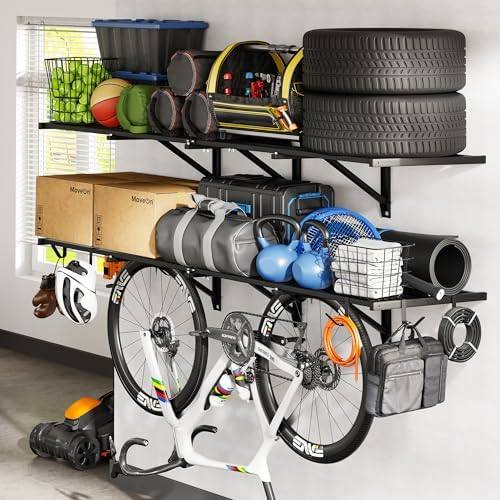
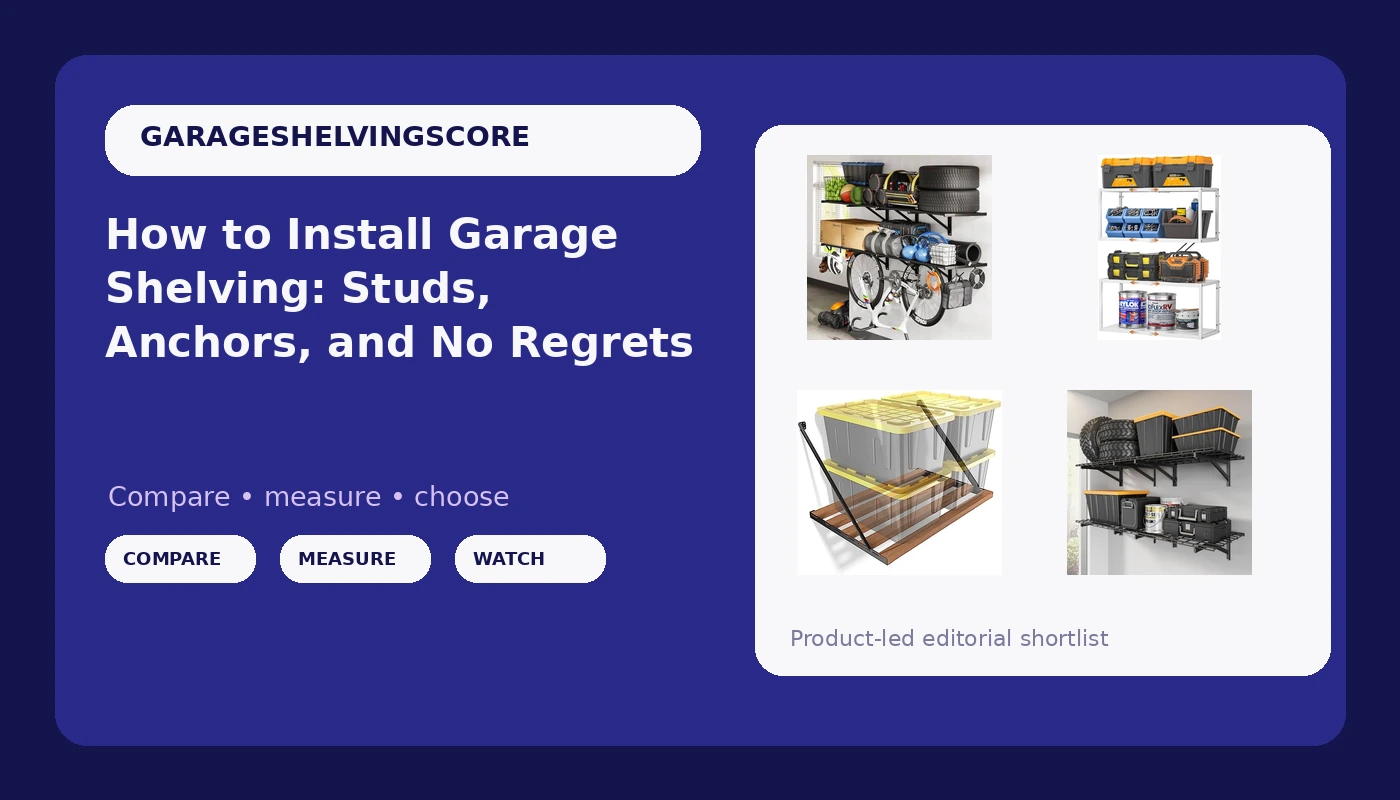
FLEXIMOUNTS 2-Pack 2x6ft Garage Wall Shelving with 8 Hooks, 1200lbs, Black
1200 lbs capacity, 8 hooks included, welded frame
Visit on Amazon →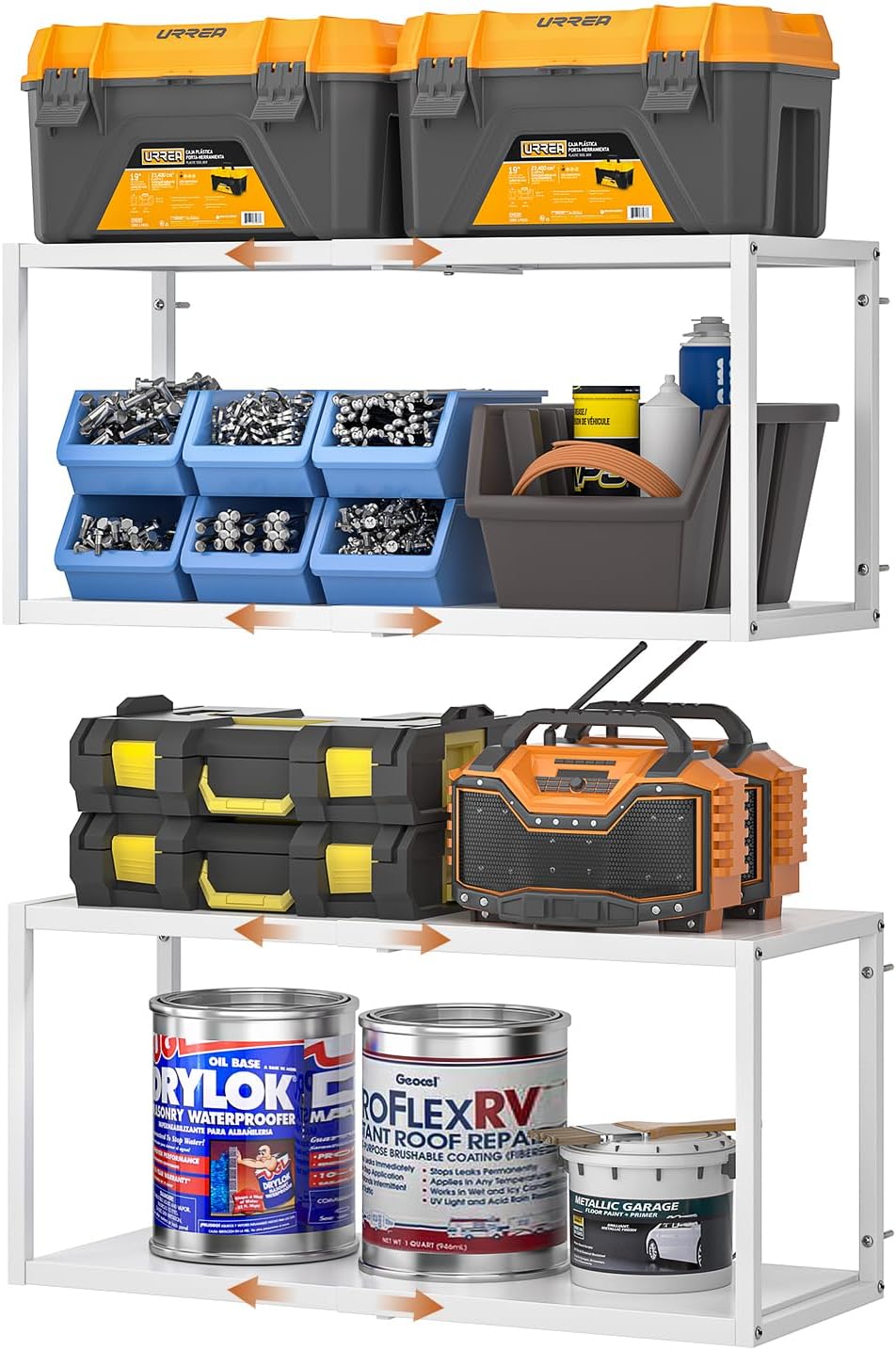
ThreeHio 2 Pack Expandable Garage Shelves Wall Mount, Heavy Duty Garage Wall Shelving, Hanging Storage Rack Metal Shelving for Garage Organization, Floating Shelves for Laundry Bathroom Living Room
Good value for three units, solid steel
Visit on Amazon →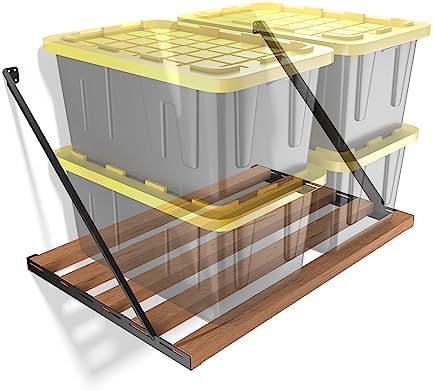
Koova Universal Garage Shelving Kit - Heavy-Duty, Easy Install, Customizable, 600 lbs. Support, Made in USA, Maximize Storage, Reclaim Floor Space
Customizable, easy to cut to fit
Visit on Amazon →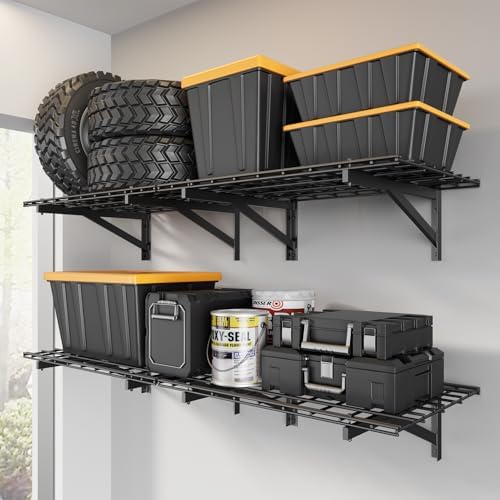
Jusgym 4 Pack Wall Mounted Garage Shelving, 2x3ft, 1400lbs Integrated Grid
2-Pack 2x4ft 4-Pack 1.5x4ft 2-Pack 1x4ft 2 Pack 1.5x4ft 4 Pack 1.5x4ft 2 Pack 2x3ft 4 Pack 2x3ft
Visit on Amazon →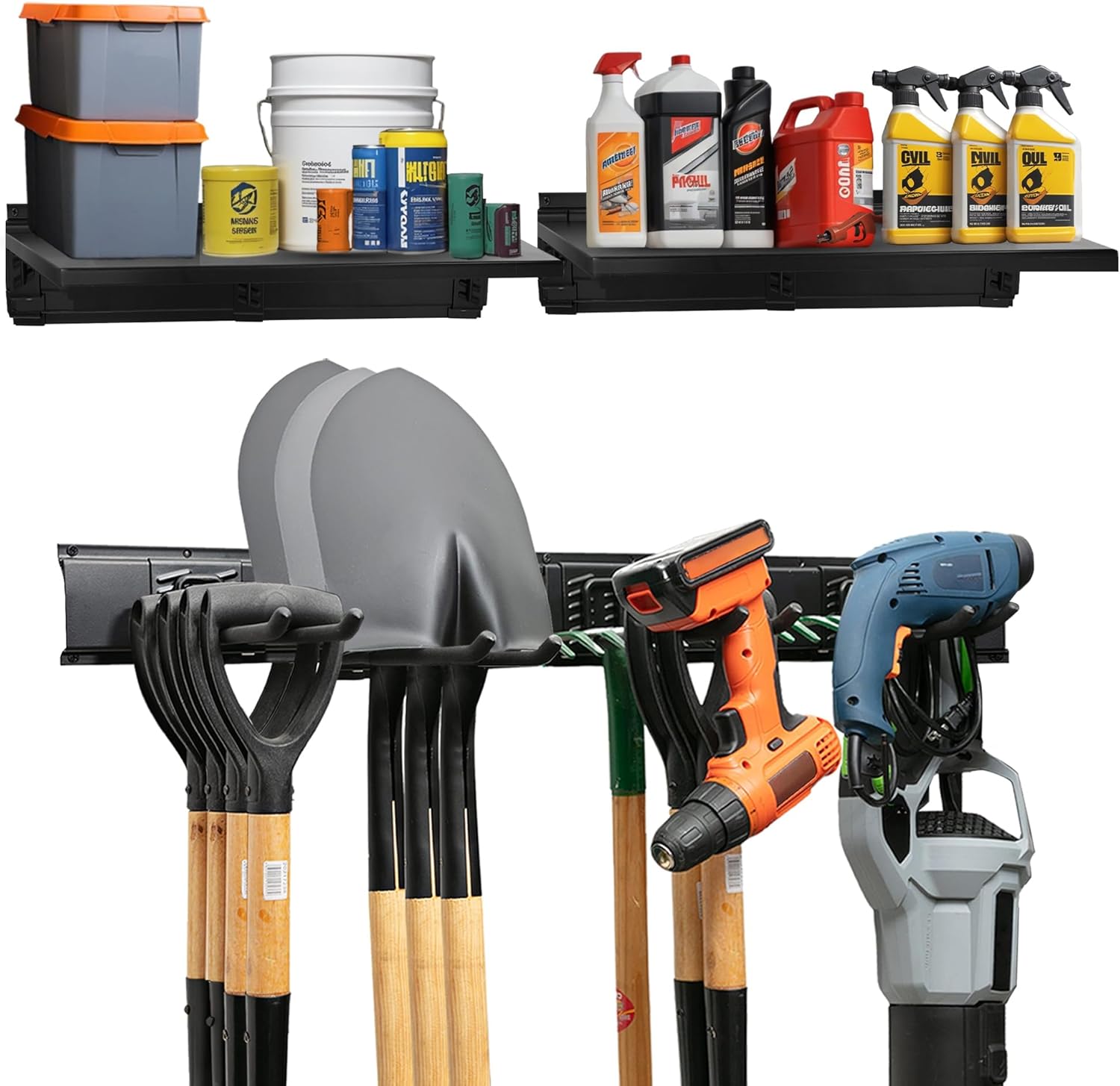
TIDYME Garage Tool Organizer Wall Mount 64", 2 Shelves & 4 Single Hooks
Shelves plus hooks in one, 64 inches tall
Visit on Amazon →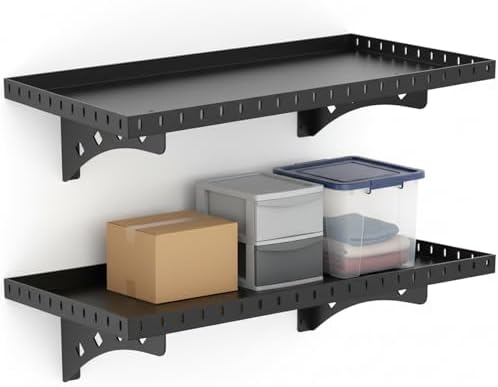
2 Pack Garage Wall Shelf, 1X2 Ft Heavy Duty Shelving, for Garage, Power Tools, Toolbox, Storage Shelves with for Workshop Office, Holds Up to 100 Lbs (Black)
FLEXIMOUNTS provides complete and easy solutions for helping organize your garage space. Garage organization can never be a simple thing. All we do is to make your experience in space management a lot
Visit on Amazon →Find the studs first, or you're wasting your time
Before you even open the box, you need to know what you're anchoring into. A stud finder is a ~$20 tool that saves you a ~$200 mess. I use mine on every single install, even in my own garage where I've hung stuff a dozen times. Walls change, and so do my memories of where the studs are.
Here's the thing about garage walls: they're usually unfinished, which means you can see the studs. But if you've got drywall up, you're working blind. Run the finder along the wall until it beeps, mark the spot, and then confirm it with a tap. Solid sound means wood. Hollow sound means you're about to screw into nothing.
The studs in a garage are typically 16 inches on center, but don't trust that. Measure every time. And here's the rule I live by: if a shelf unit is rated for more than 100 lbs per shelf, it needs at least one screw in a stud. Not drywall, not a toggle bolt, a stud. That's the load path. If any part of that path is wrong, the shelf is coming down.
The anchor question: when drywall is all you've got
Sometimes the studs aren't where you need them. That happens with wall-mounted shelving, especially if you're working with a specific layout. When I hit that situation, I use toggle bolts, not the plastic anchors that come in the box. The plastic ones are fine for a picture frame. They're not fine for a shelf holding 300 lbs of garage junk.
Toggle bolts spread the load across a larger area of drywall, which means they can handle real weight. But they have a limit. If you're hanging something rated for 600 lbs per shelf and you're only hitting drywall, you're asking for trouble. The fix is to plan the layout around the studs, not the other way around. Move the shelf over six inches if it means hitting wood.
I've seen too many shelves come down because someone trusted a plastic anchor. The drywall didn't fail, the anchor did. It pulled right through. Now I tell everyone the same thing: if it's going to hold anything heavier than a bag of rags, find a stud.
Marking, leveling, and the first screw
Once you know where the studs are, hold the shelf up and mark the mounting holes. This is where a second pair of hands helps. I've done it alone more times than I can count, and it always takes twice as long because I'm holding, marking, and cursing. If you've got a buddy, use them.
Level the shelf before you drill anything. A shelf that's off by half an inch looks terrible and, worse, stuff rolls off it. Use a real level, not your eyeball. I've got a 4-foot level that lives in my truck, and it's seen more garage walls than most contractors' tools.
Drill pilot holes with a bit that's slightly smaller than your screws. This prevents the wood from splitting and makes the screw go in straight. Then drive the screws, but don't overtighten them. You want the bracket snug against the wall, not crushed into it.
What I actually install in client garages
I've put up a lot of wall shelving over the years, and I've settled on a few units that hold up. The FLEXIMOUNTS 2-Pack 2x6ft Garage Wall Shelving is the one I reach for when a client needs serious storage.
It's rated for 1200 lbs across both units, which is real weight. I loaded one up with tool totes and a few bins of hardware, and it didn't budge.
The welded frame is solid, and the 8 hooks are a nice touch for hanging extension cords and hoses.
My gripe with the FLEXIMOUNTS is the hooks. They're a bit light for heavy tools. I hung a sledgehammer on one and it flexed. Not a dealbreaker, but if you're planning to hang anything that weighs more than a few pounds, upgrade the hooks.
The ThreeHio 3 Pack Garage Wall Shelving is my budget pick. Three units for around ~$110 is hard to beat, and the steel is heavy gauge. The per-shelf rating isn't huge, so I wouldn't put engine blocks on it, but for bins, boxes, and seasonal stuff, it's perfect.
I've got two of these in my own garage holding Christmas decorations and camping gear. They've been up for a year and haven't sagged an inch.
The kits that make you work for it
The Universal Garage Shelving Kit is interesting because it's customizable. You cut the tracks to fit your space, which means you can squeeze it into odd corners. That's a real advantage if your garage is shaped weird. But that also means you're doing more work. It's not a hang-and-go unit. You're measuring, cutting, and planning. If you're not comfortable with that, skip it.
The Jusgym 4 Pack Wall Mounted Garage Shelving is the heavyweight. Four units, 1400 lbs integrated capacity, and a finish that doesn't rust. I installed these in a client's garage who stores lawn equipment and it's been two years without a problem. The downside is the price, around ~$150, and it's overkill if you're just storing a few bins.
When you need a freestanding unit instead
Wall shelving isn't always the answer. Sometimes you need a freestanding unit, especially if your walls are cinder block or you don't want to drill. The is a best seller in standing shelf units for a reason. It's a 5-tier wire unit that assembles in about 45 minutes. The catch is the rated capacity. The big number on the box is total, not per-shelf. Read the fine print before you load it up.
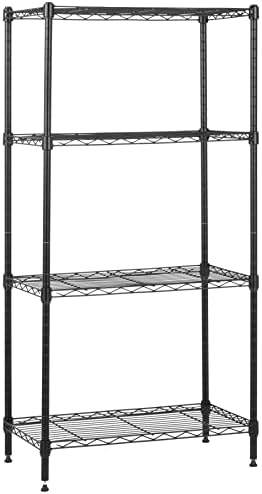
I've got one of these in my shop holding paint cans and light tools. It's fine for that. I wouldn't put heavy bins on the middle shelves, though. I've seen these units bow under real weight. Anchor it to the wall and respect the per-shelf rating, and it'll treat you fine.
The little stuff that makes a difference
The Garage Tool Organizer Wall Mount is a different beast. It's 64 inches tall with two shelves and four double hooks. It's not for bulk storage, it's for keeping tools off the workbench. I installed one in my own garage for my most-used hand tools, and it's been great. The narrow footprint means it fits in tight spaces, but that also means it's not holding much volume.
The 2 Pack Garage Wall Shelf is the compact option. Each shelf is 1x2 feet, which is small. I use one for spray paint and another for rags. It's cheap, around ~$75, and it does the job. But if you're expecting to store totes or bulky items, you'll be disappointed.
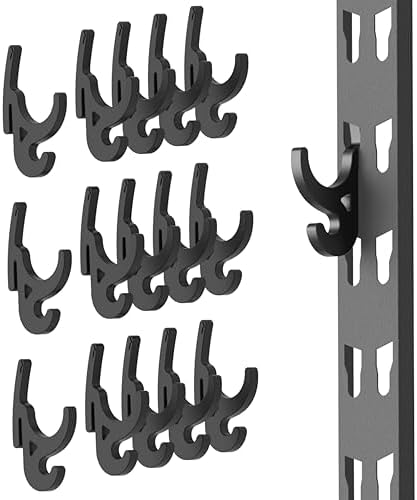
And for the hooks themselves, the Heavy Duty Universal Hook 2 in 1 is worth grabbing. They fit standard industrial racks and they hold up. I've got a set on my freestanding unit for hanging extension cords and hoses.
Anchoring is not optional
Every shelf wobbles if you don't anchor it. That's physics. But if it wobbles when it's bolted to the wall, you bought a bad unit. The fix for most freestanding units is a simple L-bracket screwed into the top of the unit and into a stud. It takes ten minutes and it's the difference between a shelf that's still standing in five years and one that's on the floor.
I had a shelf bow out on me once. Paint cans rolled off, one split, took a whole weekend to clean up. That was before I knew to check per-shelf ratings and anchor everything. Now I do both, and I haven't had a failure since.
My honest bottom line
Installing garage shelving right comes down to three things: find the studs, use the right anchors, and don't trust the big number on the box. If you do those, any of the units I mentioned will hold up. If you skip them, you're rolling the dice with your stuff and your weekend.
For most people, I'd say start with the FLEXIMOUNTS 2-pack if you need real wall storage, or the ThreeHio 3-pack if you're on a budget. Both are solid, both are units I've installed and lived with, and both will still be standing in five years. That's the test that matters.