Most garages don't have a storage problem. They have a load path problem. You buy a rack, you load it with paint cans, a table saw, and four seasons of holiday bins, and by spring the shelves are bowing and the whole unit is leaning away from the wall. The money you spent wasn't the issue. The rating, the frame, and the anchor were.
This guide covers six heavy duty garage shelving units, from a compact wire rack rated at 200 pounds per shelf up to a welded industrial frame rated at 2,500 pounds per shelf. Every capacity figure below comes from the manufacturer's published specification for that exact model, not from a lab I built in my driveway. What I can tell you as someone who has installed hundreds of these things is which numbers actually matter once the box is open and the shelf is full.
Related: How to Anchor Garage Shelving Into Studs
Quick answer
The Husky Industrial Duty Steel Garage Shelving Unit, Heavy Duty Metal Storage Rack, 2500 lbs. Capacity Per Shelf, Adjustable Tiers, Welded Frame Colors is the strongest fit for a garage that stores tile, lumber, engine parts, or anything else that stacks up heavy, because its published capacity is 2,500 pounds per shelf and the frame is welded rather than bolted together. Choose the Amazon Basics 5-Shelf Heavy Duty Garage Shelving Storage Rack with 4" Wheel Casters instead when you need to roll the rack out of the way to reach the wall behind it.
Garage shelving units worth comparing
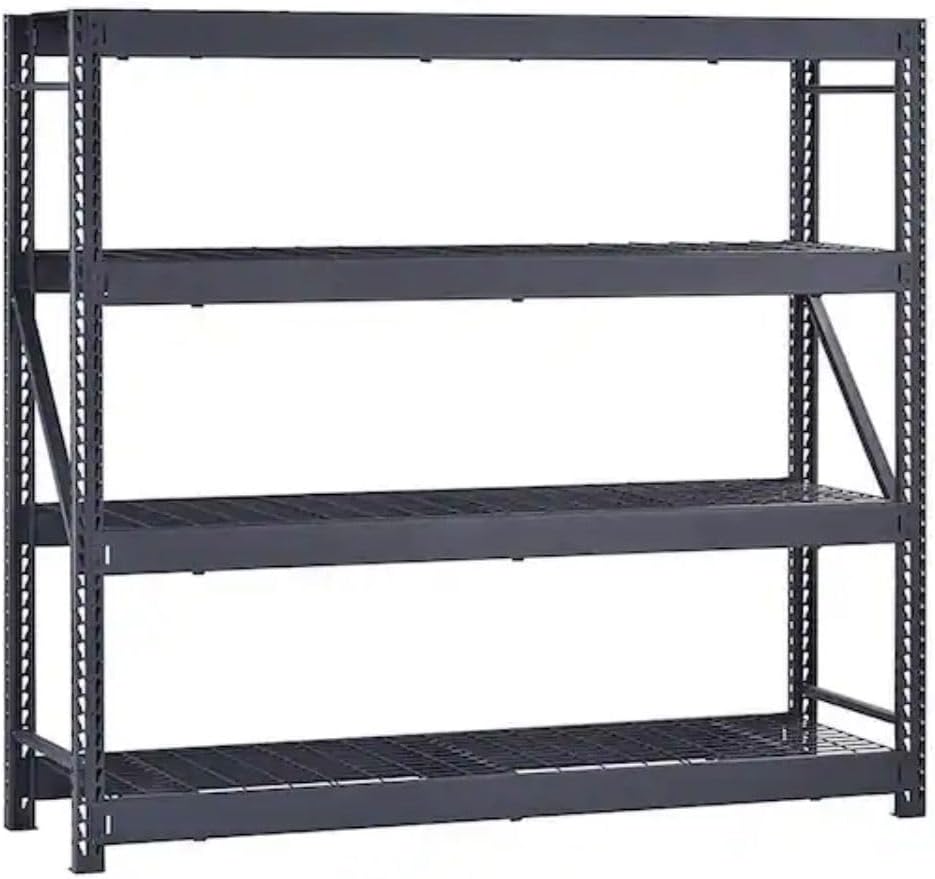
Husky Industrial Duty Steel Garage Shelving Unit, Heavy Duty Metal Storage Rack, 2500 lbs. Capacity Per Shelf, Adjustable Tiers, Welded Frame Colors
A welded steel rack with a published capacity of 2,500 lbs per shelf and adjustable tiers. This is the one to look at when the load is tile, engine blocks, or anything that stays put for years.
Visit on Amazon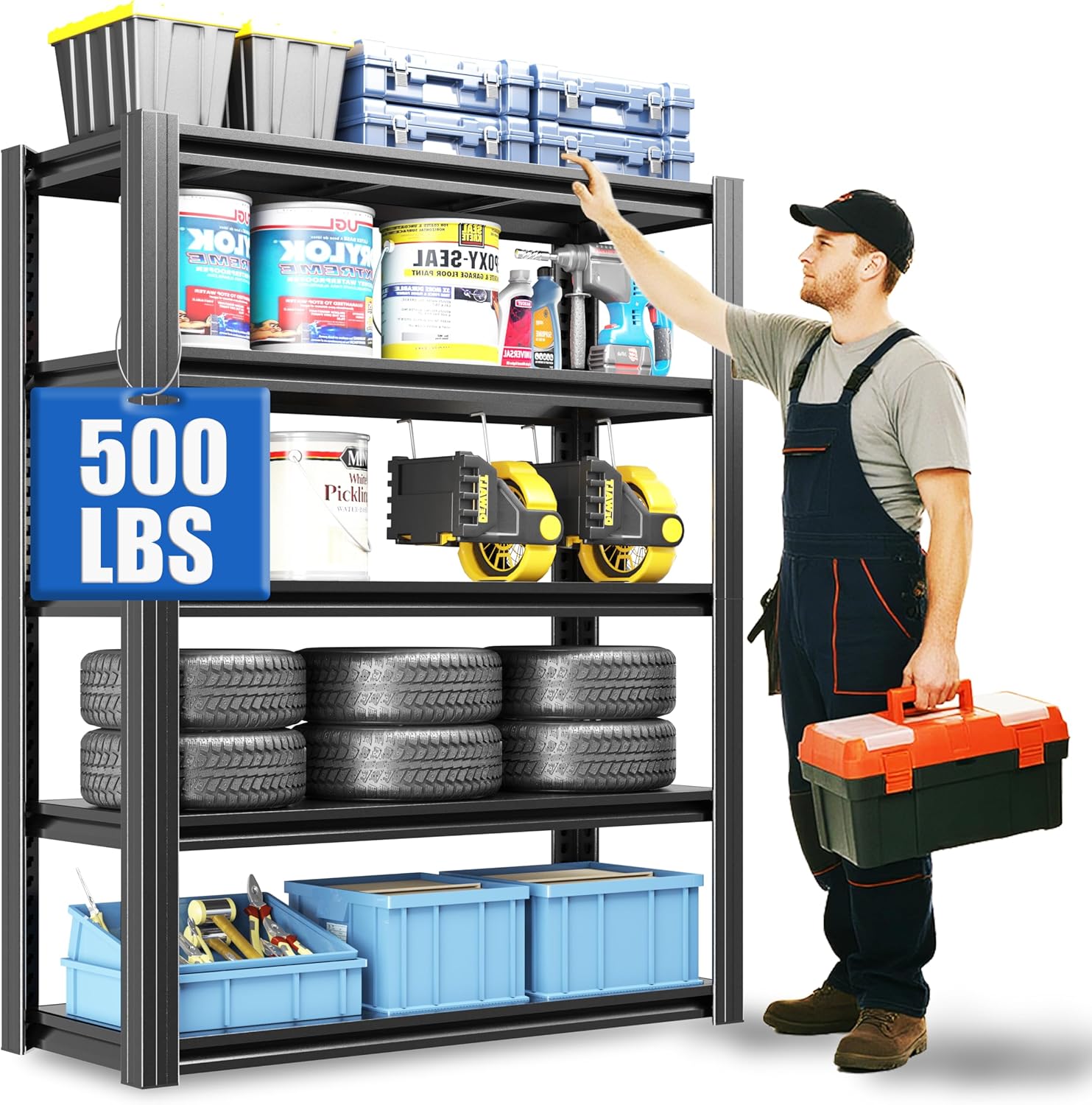
72" H Garage Shelving 2500 LBS Heavy Duty Storage Shelves, Adjustable 5 Tier Metal Shelving Unit, Metal Racks for Storage, Utility Shelves for Workshop, Basement, Home Office 72" H*35.4"W*15.7"D
Five adjustable tiers on a 72 x 35.4 x 15.7 inch frame with a published 2,500 lb capacity. A tall, wide utility rack aimed at workshops, basements, and utility rooms.
Visit on Amazon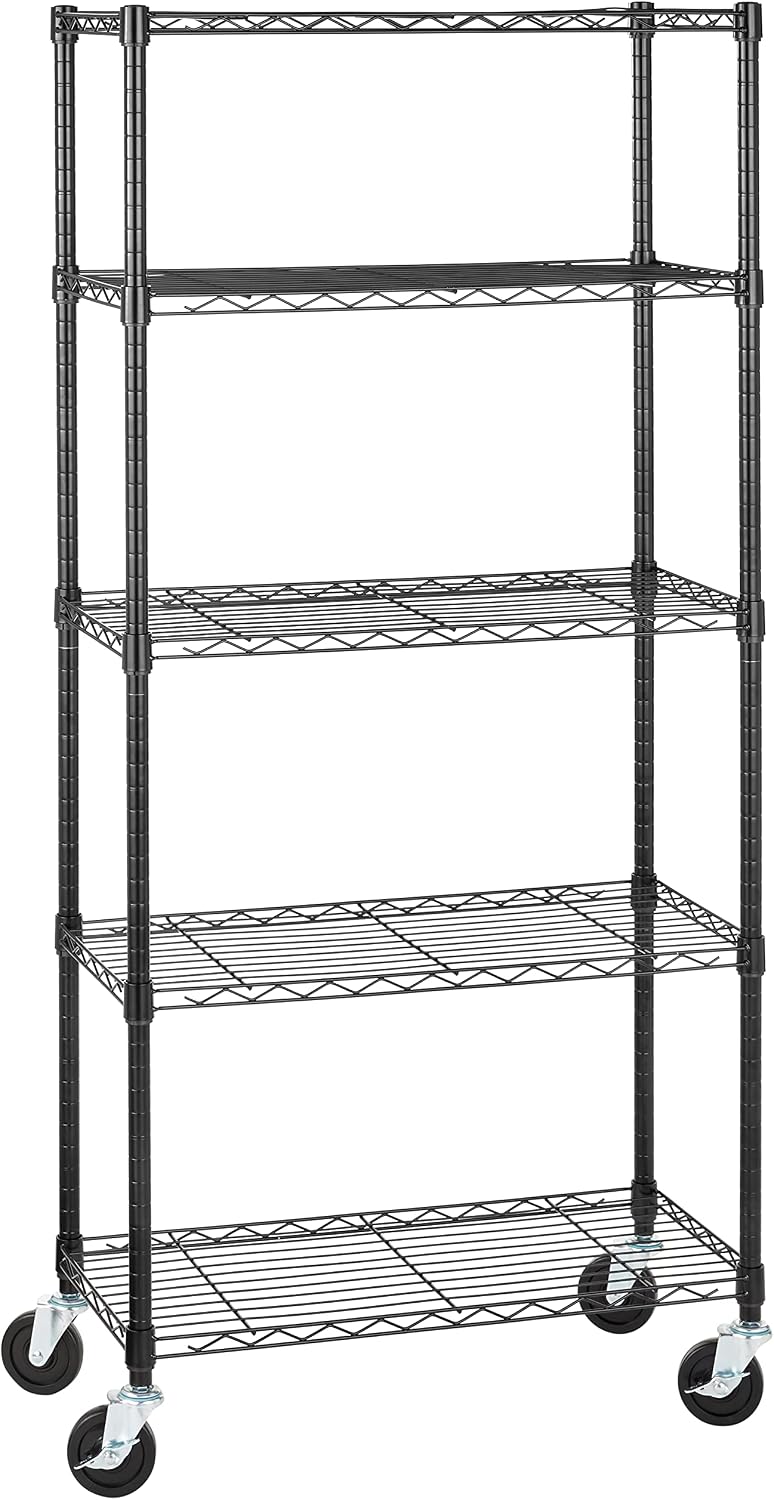
Amazon Basics 5-Shelf Heavy Duty Garage Shelving Storage Rack with 4" Wheel Casters, Adjustable Metal Wire Organizer, 300 lbs Per Shelf, 30" x 14" x 64.75", Black
Five adjustable wire shelves rated at 300 lbs per shelf on a 30 x 14 x 64.75 inch frame, with 4 inch casters so the whole rack can be pulled away from the wall for cleaning or re-arranging.
Visit on Amazon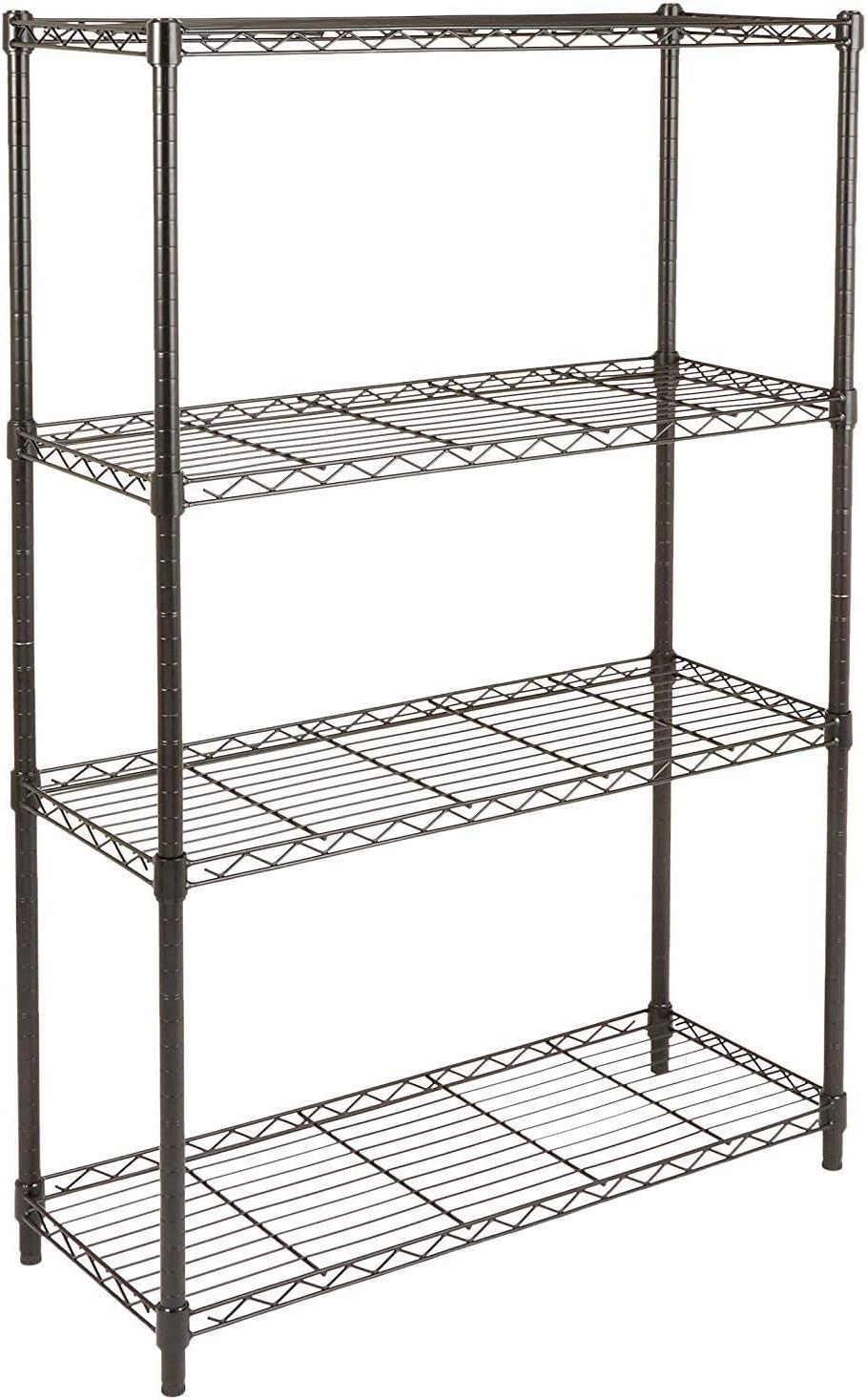
Amazon Basics 4-Shelf Adjustable Heavy Duty Steel Wire Rack Storage Shelving, Sturdy Garage Shelving, 350 lbs Capacity Per Shelf, Easy No-Tool Assembly, 36" x 14" x 54", Black
Four adjustable wire shelves rated at 350 lbs per shelf, on a 36 x 14 x 54 inch frame that assembles without tools. A practical pick for totes, paint, and lighter power tools.
Visit on Amazon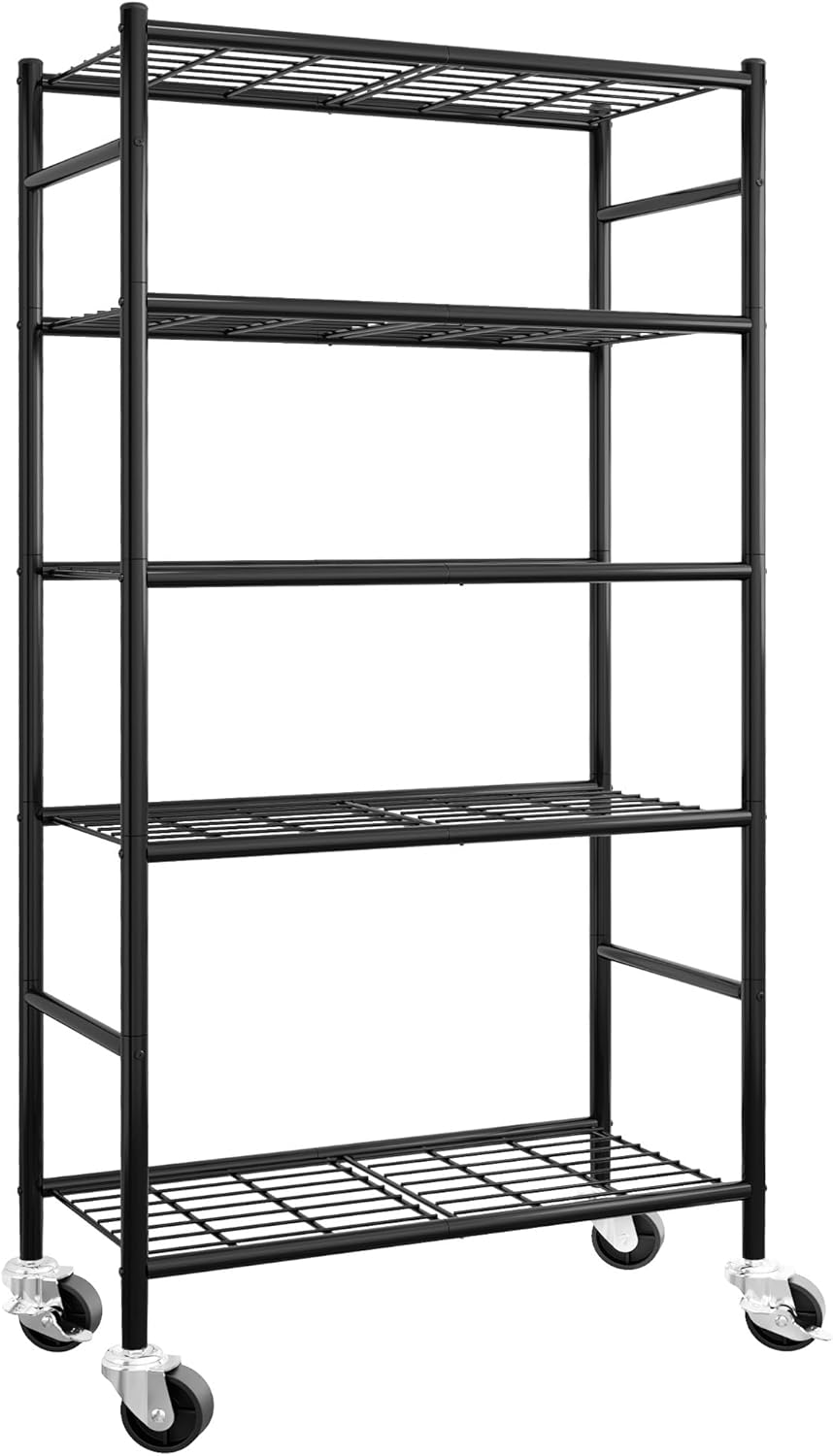
Sakugi 5-Tier Storage Shelves 33.1" x12.6" x73.5" Black with Wheels
A five-tier black shelving unit measuring 33.1 x 12.6 x 73.5 inches, fitted with wheels. The narrow footprint and tall stack suit tight wall space and lighter household storage.
Visit on Amazon
Amazon Basics 4-Shelf Steel Wire Storage Shelves for Garage, Adjustable Metal Shelving Unit, 200 lbs Per Shelf, 23.2" W x 48" H x 13.4" D, Black
A compact four-shelf wire unit rated at 200 lbs per shelf, measuring 23.2 x 48 x 13.4 inches. Sized for closets, narrow wall runs, and light garage overflow.
Visit on AmazonPrices and availability may change. Check the retailer for current details.
How these products were compared
This guide compares published per-shelf and total weight capacity, frame construction (welded versus bolted, wire versus solid steel), shelf count and adjustability, overall footprint and height, and mobility features such as casters. Product names, images, and retailer links are matched by identifier so that every card points to the product shown.
The capacity numbers here are the manufacturer's ratings, which are established under ideal, evenly distributed loads. They are a starting point for comparison, not a promise about your wall. What the rating does not tell you is whether your studs are where you think they are, whether the floor is level, or whether the anchor hardware in the box is up to the job.
How to choose the right garage shelving unit
Start with the load, not the look. Walk around your garage and be honest about what is going on the shelves. Totes of clothes and holiday decorations are light. Paint cans, tile boxes, engine parts, bags of concrete, and stacks of lumber are not. A 2,500 pound per shelf rating sounds absurd until you price out a pallet of tile. A 200 pound per shelf rating sounds generous until you realize four full five-gallon buckets of paint can approach that on their own.
Then look at where the rating is measured. A welded steel frame rated at 2,500 pounds per shelf and a bolted frame with the same headline number are not the same product. Welds do not loosen. Bolted joints can, especially in a garage that swings from 15 degrees in February to 105 in August. If you are buying a bolt-together unit, plan on re-checking the hardware after the first month and again at the start of each season.
Width and depth decide more installs than capacity does. The tall five-tier units here run from a narrow 33.1 inch by 12.6 inch footprint up to 35.4 inches wide and 15.7 inches deep, and the difference matters when you are fitting between a water heater and a garage door track. Measure the wall run, measure the swing of the car door, and leave yourself room to actually pull a tote off the shelf. A rack you cannot reach behind is a rack you will stop using.
Finally, decide whether you need to move it. Casters change the whole relationship you have with a rack. If you want to sweep behind it, roll it out of the way of a project, or reconfigure the garage every couple of years, wheels earn their keep. If it is going to sit against a wall holding heavy material for a decade, casters are just a set of joints between the load and the floor.
Husky Industrial Duty Steel Garage Shelving Unit
This is the heavy end of the category. The Husky unit publishes a 2,500 pound capacity per shelf, uses a welded frame, and offers adjustable tiers, which puts it in a different class from the wire racks most homeowners start with. For a garage holding tile, stacked lumber, transmission parts, or a working inventory of tools, that headroom is the whole point. You are buying a structure, not a shelf.
The trade-off is that it is the most expensive approach in this group and it is sized for loads most garages never see. If your storage is holiday bins, sports gear, and a few boxes of books, you are paying for capacity you will not use, and the unit will take up more of your floor than the job requires. That is not a flaw in the product. It is a mismatch between the rack and the room.
Alternatives to consider
The Amazon Basics 5-Shelf Heavy Duty Garage Shelving Storage Rack with 4" Wheel Casters is better suited to a garage that gets reconfigured often, since the casters let you move a loaded rack without unloading it. Its published rating is 300 pounds per shelf across five adjustable shelves. The 72" H Garage Shelving 2500 LBS Heavy Duty Storage Shelves is a stronger fit when you want a tall, wide five-tier unit with a high published capacity and do not need it to roll.
The Amazon Basics 4-Shelf Adjustable Heavy Duty Steel Wire Rack Storage Shelving, the Sakugi 5-Tier Storage Shelves, and the Amazon Basics 4-Shelf Steel Wire Storage Shelves for Garage cover the lighter end. The first pairs a 350 pound per shelf rating with a 36 inch wide frame and no-tool assembly. The Sakugi brings a tall, narrow 33.1 by 12.6 inch footprint on wheels. The compact 200 pound per shelf unit fits wall runs and closets where a full-width rack will not go.
Day-to-day use and maintenance
Load shelves from the bottom up and keep the heavy items low. A rack is most stable when its center of gravity is near the floor, and the top shelf is the worst place for a case of oil or a box of tile. Distribute weight across the shelf rather than piling it in the middle, and keep an eye on wire shelves in particular, which concentrate load at the wires rather than spreading it across a solid deck.
Anchor anything taller than waist high. Even a rack that stands fine when empty will walk and lean once it is loaded and someone bumps it with a lawnmower. Find the studs, use hardware rated for the load and the wall type, and if you are going into masonry or a finished wall without accessible framing, treat that as a separate project before the shelf goes up.
In an unconditioned garage, expect the finish to age faster than the structure. Temperature swings and humidity work on powder coat and plated hardware long before they affect a weld. Wipe down wire shelves when they get dusty, keep the frame hardware snug, and if you see rust starting on a joint, deal with it in the same season rather than the next one.
Buying checklist
- Measure the wall run, the ceiling height, and the clearance your car door needs before choosing a width and height.
- Match the published per-shelf rating to your real load, not the load you wish you had.
- Confirm whether the capacity figure is per shelf or for the whole unit.
- Decide up front whether you want casters or a fixed base.
- Check the frame type: welded versus bolted, wire versus solid deck.
- Verify the current retailer price, availability, and return terms before ordering.
Final recommendation
Choose the Husky Industrial Duty Steel Garage Shelving Unit, Heavy Duty Metal Storage Rack, 2500 lbs. Capacity Per Shelf, Adjustable Tiers, Welded Frame Colors when the garage is a workshop and the load is heavy, permanent, and worth building around. Choose the Amazon Basics 5-Shelf Heavy Duty Garage Shelving Storage Rack with 4" Wheel Casters when you need a rack that moves, or step down to the wire units when your storage is light and your wall space is tight. The right answer is the one that matches your load and your studs, and those are two things you can check before you buy.