I have been building and finishing garages around Kansas City for twenty years, and the last eight of those have been almost entirely storage systems. Shelving, ceiling racks, wall panels, workbenches. I have installed hundreds of units in garages their owners swore would never be organized, and I have watched a few of those units come off the wall because somebody trusted a number on a carton more than they trusted their studs.
That is the whole frame for this comparison of garage shelving and ceiling storage. Weight ratings are measured in a lab with perfect mounting into good lumber. Your drywall is not a lab. So when I line up four systems, I am not ranking them by the biggest number printed on the box. I am ranking them by what each one is genuinely good at, and by what happens in year three, after a couple of Kansas City winters have had their way with the powder coat and the clips.
Related: Garage Ceiling Storage Weight Limits Explained
If you want the short answer: the 5-tier adjustable shelving unit is the best value for floor storage, and the overhead ceiling lift is the best square-footage play in the entire garage. They are not competitors. Buy them for different jobs.
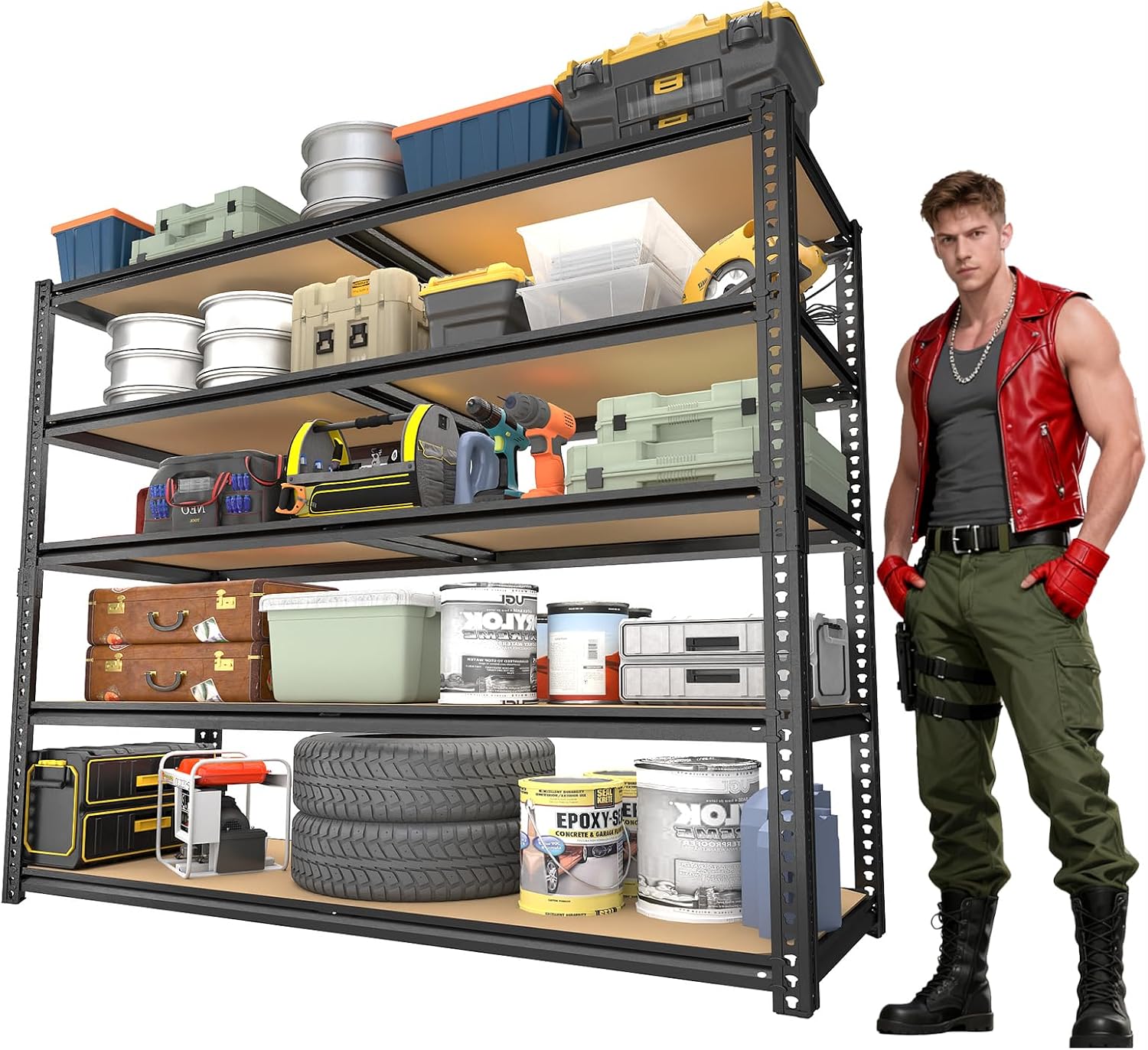
Garage Racks for Storage 5-Tier Adjustable Garage Shelving, 72" H x 40" W x 20" D
The most load capacity per dollar here, five adjustable tiers, and a 20-inch depth that leaves you a walking lane
Heavy, top-heavy before it is anchored, and the total capacity is not a per-shelf capacity

4-Tier NSF 9-Bin Steel Wire Shelving Rack, 36" W x 14" D x 31" H, Graphite
Nine bins erase small-part clutter, the NSF listing suits a shop or a wash area, and the 14-inch depth tucks against a tight wall
Wire sags under point loads. This is a light-duty and small-parts unit, not a toolbox shelf
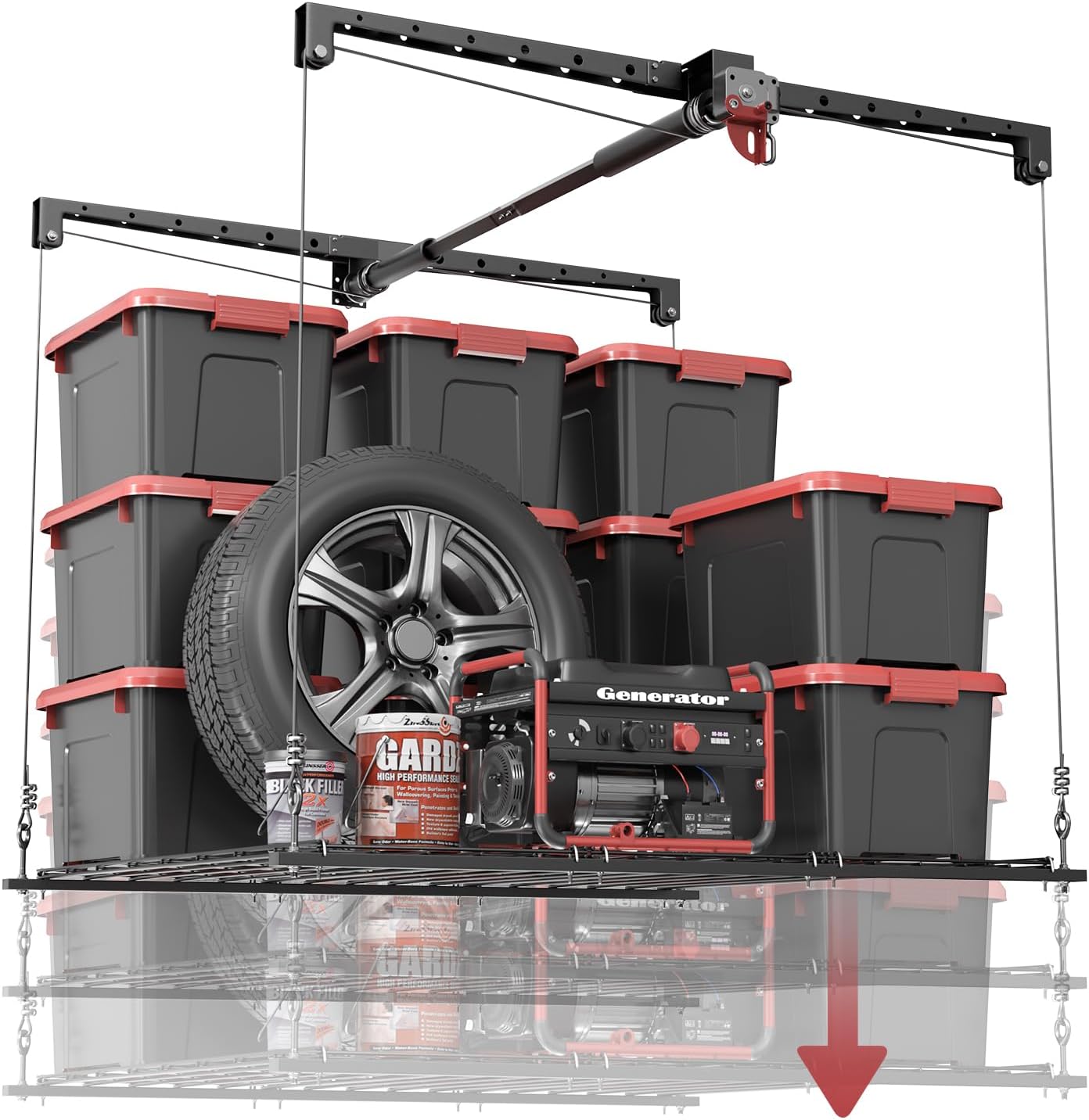
Overhead Garage Storage Lift, Heavy-duty 4x4 Ft Ceiling Rack with Safety Lock, 250 lbs Capacity
Uses ceiling space, which costs you nothing, and the lift keeps the load reachable instead of stranded
250 pounds is a real rating but a modest one, and the whole install lives or dies on your joists and ceiling height
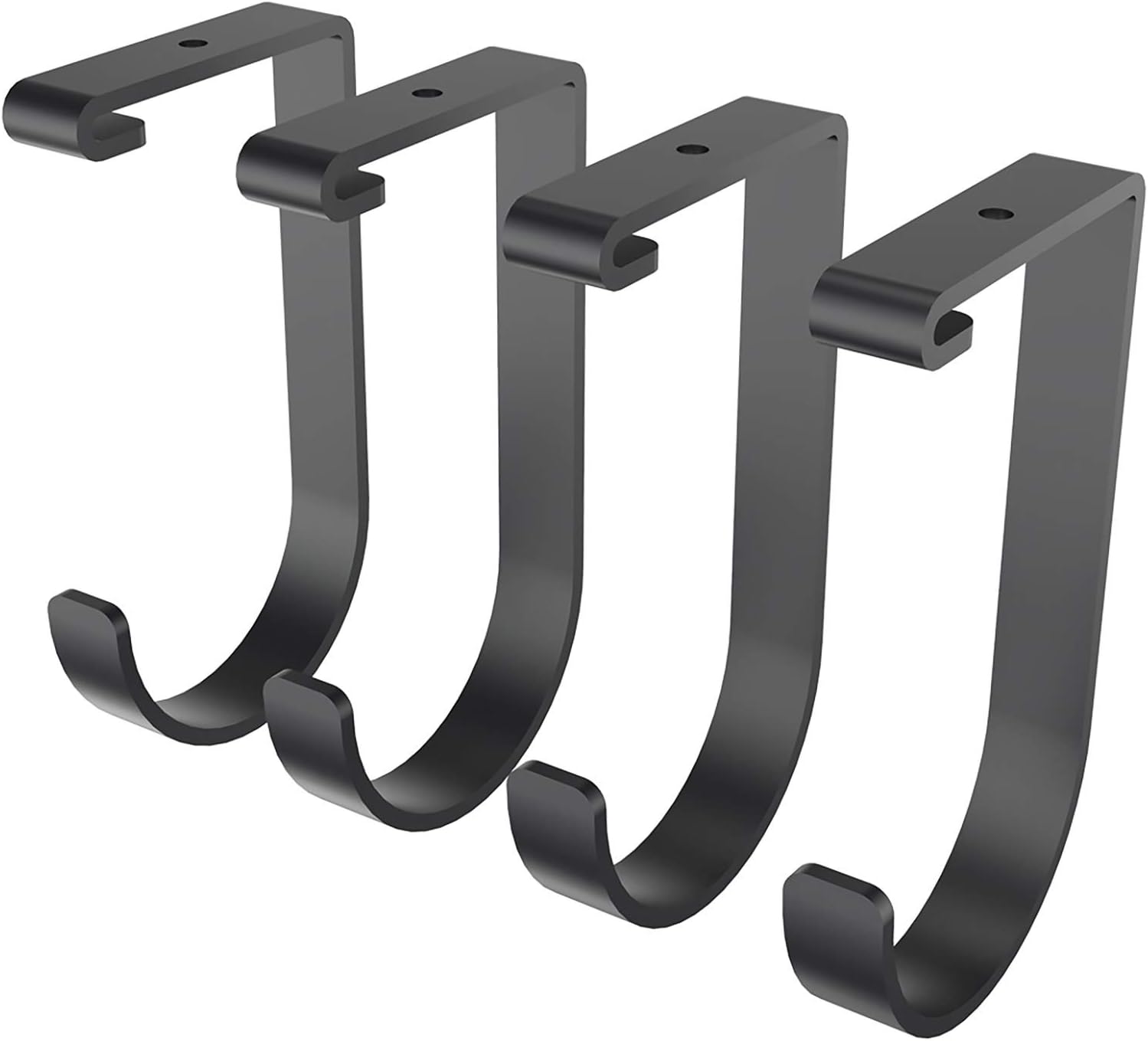
FLEXIMOUNTS 4 Pack Add-On Storage Flat Hooks, Black
The cheapest way to get ladders, cords, and hoses off the floor, sold as an add-on to the Fleximounts line
Four hooks, small loads, and no storage system of its own. It is a supporting actor
Prices and availability were captured from Amazon Creators API and may change.
What the contractor test actually measures
I have one rule I do not break: I do not repeat a weight rating I have not seen survive double the load for a year. That is the contractor test, and it exists because the number on the box is measured at the bracket, in a lab, bolted to ideal lumber. Your garage is not ideal lumber. It is whatever the framer had on the truck in 1998, plus forty feet of romex you did not know was there.
There are three ways a storage system fails, and only one of them is about the steel.
The first is the load path. If the shelf is anchored into drywall alone, it is coming down. Not maybe. Drywall plugs are for pictures. Find the studs, or find a different wall.
The second is the connection. Bolts that strip before they are tight, clips that pop out of a slot when a tote lands on them, powder coat that flakes off in one winter and leaves bare steel to rust. I check the hardware bag before I check the load rating, because hardware is where the money got saved.
The third is the load itself. A shelf rated for 800 pounds is rated for 800 pounds spread evenly across the whole span. Put one 200-pound engine block in the middle and you have created a point load that the span was never designed for. This is the mistake I see most often, and it is the reason wire shelving has such a bad reputation in my trade.
The 5-tier adjustable shelving: the floor storage workhorse
This is a 72-inch tall, 40-inch wide, 20-inch deep unit with five adjustable tiers and a heavy-duty capacity claim. That footprint is close to ideal for a two-car garage, and the 20-inch depth is the number that matters most. Anything deeper and you start losing your walking lane between the car and the wall. Anything shallower and a standard tote hangs off the front.
Five adjustable tiers means you can set shelf heights around what you own instead of around what the factory decided. Tall totes at the bottom, mid-size bins in the middle, the odd-shaped stuff up top. Adjustability is not a marketing feature on a unit like this. It is the whole reason you would pick it over a fixed rack.
Here is the caution, and it is not small. A unit this tall is top-heavy the moment you load the upper shelves, and it will not stay where you put it if you skip anchoring. Anchor it into studs, or into a concrete wall with the right hardware, and treat the top tier as the place for light, bulky items. That capacity number describes the unit under ideal distribution, not the top shelf in your garage.
This is the pick if you have floor space, a wall with studs behind it, and a garage full of totes that currently live on the concrete.
The 4-tier wire rack with bins: the small-parts specialist
I say wire shelving is junk, and I also have a wire shelf in my own garage holding paint cans. Both things are true, and the difference is what you put on it.
This rack is 36 inches wide, 14 inches deep, 31 inches tall, four tiers, graphite finish, NSF listed, and it comes with nine bins. That combination tells you exactly what it is for. It is a shop rack. Bins for screws, fittings, tape, sandpaper, spray nozzles, the small chaos that otherwise migrates across a workbench. The 14-inch depth is a gift against a narrow wall or beside a door, and the low 31-inch height keeps the top tier within reach instead of turning it into a place things go to be forgotten.
The NSF listing is worth noting if your garage doubles as a wash area or you keep anything near food, because it is a sanitation standard rather than a strength standard. It does not make the wires thicker.
Where wire loses is point loads. Wires sag, and the clips that hold the shelves to the posts are the first thing to complain. Keep this rack on light and medium items, keep the bins as the load spreaders, and resist the urge to drop a loaded toolbox on the top tier. That is the bet I described, and it is a bad one.
The overhead ceiling lift: the best square footage in the garage
The ceiling is the only free real estate in a garage. If you are not using it, you are renting it to the air, and that is a waste of a perfectly good structural system.
This is a 4x4 foot ceiling rack with a safety lock and a 250-pound capacity, and the lift mechanism is the part that earns its keep. A fixed ceiling rack is great until you need something off it, at which point you are balancing on a stepladder with a tote over your head. A lift brings the platform down to you. For seasonal bins, camping gear, holiday decorations, and the stuff you need twice a year, that is a meaningful difference in how often you will actually use the storage.
Now the honest part. Two hundred and fifty pounds is not a lot. It is fine for soft goods and plastic bins. It is not where the tile saw goes, and it is not where the engine hoist goes. Read that rating as a ceiling on what you put up there, not a target.
Install is the other gate. This rack hangs from your ceiling joists, and the joists run one direction. You need to know which direction before you order anything, because a rack that spans the wrong way is a rack that is not attached to structure. You also need ceiling height and a garage door that clears the platform in both the up and down positions. Measure the door travel with the rack down. I have seen a lift installed in front of a door track exactly once, and once was enough.
If your joists are exposed, this is an afternoon job with a helper. If your garage has a finished ceiling with no access, budget for cutting and patching. That is not the rack's fault. That is the ceiling's fault.
The flat hooks: cheap, useful, not a system
Four flat storage hooks, black, sold as an add-on to the Fleximounts line. This is the least glamorous item in the comparison and the one most likely to change how your garage feels on a daily basis, because ladders and cords are the items that live on the floor and get stepped over.
Hooks are not shelving and they are not rated like shelving. They hold hanging things: extension cords, garden hoses, folding chairs, a stepladder, hoses for the pressure washer. They are also the item where anchoring matters most, because a hook in drywall fails instantly and quietly under a hanging load that swings.
One practical note: these are sold as add-ons, so check them against the rack or rail system you already own before you assume they will clip into it.
The trade-offs nobody mentions
Every one of these four has a job it does well and a job it does badly, and the failure mode is almost always the same: buying the wrong one for the load.
Floor shelving gives you the most storage per dollar and the least flexibility about where it sits. Once it is loaded and anchored, that corner of the garage belongs to it. Ceiling storage gives you the most space for nothing and the smallest load rating, plus an install that depends on framing you may not have looked at since you moved in. Wire racks organize small parts beautifully and fold under point loads. Hooks cost almost nothing and hold almost nothing.
The other trade-off is finish. Cheap powder coat flakes after one winter of freeze and thaw, and once it flakes, bare steel starts to rust in a garage that sees humidity. If a unit lives near the garage door, expect the finish to age faster than the welds. That is true of everything in this category, not one brand.
What I would put in a two-car garage
If I were starting from an empty garage and had to spend in order, it would go like this.
First, the 5-tier adjustable shelving unit, anchored into studs, for the totes and the bulky stuff. It handles the volume that no other system here can touch, and it does it for the least money.
Second, the overhead ceiling lift, mounted across the joists, for seasonal and occasional items. That is where you buy back floor space, and floor space is what lets a car fit again.
Third, the wire rack with bins if you do any real work in there. Small parts are what make a garage feel chaotic even when the big stuff is organized.
Fourth, the hooks, because twenty-some dollars to get a ladder off the floor is the best return in this entire article.
What I would not do is put a heavy, point-loaded item on wire, hang anything from drywall alone, or buy a ceiling rack without first putting a tape measure and a stud finder on that ceiling. Every one of those mistakes is the reason somebody's shelf ends up on the floor, and none of them is the product's fault.
The bottom line
Garage shelving and ceiling storage are not competing purchases. They are layers. The floor unit carries the weight, the ceiling rack carries the volume, the wire rack carries the small parts, and the hooks carry the long, awkward stuff that has been leaning in the corner since you moved in. Buy them in that order, anchor all of them into structure, and leave the drywall out of it. That is the difference between a garage that gets organized once and a garage that stays organized.