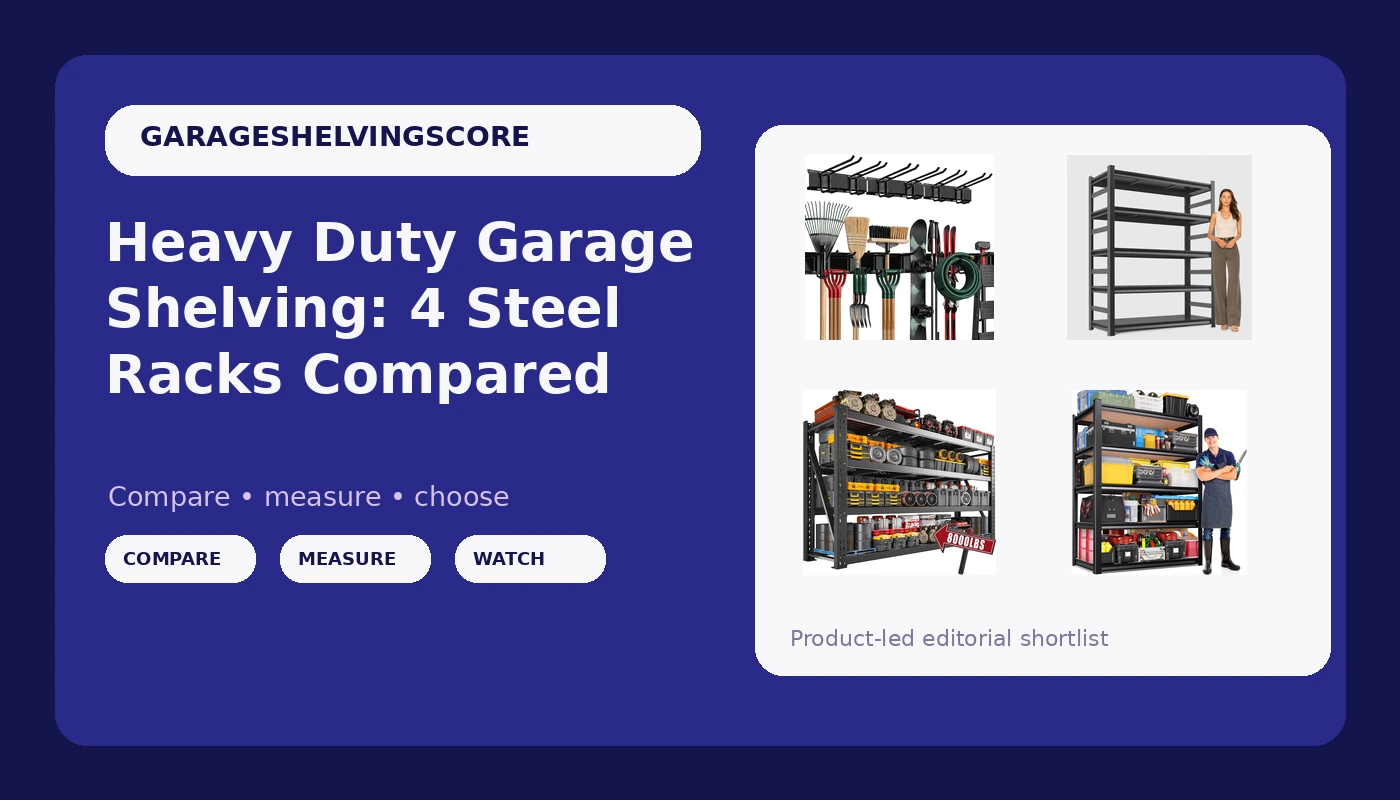
I have built or finished more garages than I can count, and the shelving conversation is the same in every one of them. Somebody has a bare wall, a pile of totes, and a plan that involves buying whatever the big box store stacked on the endcap. Heavy duty garage shelving is where that plan usually goes wrong, because the rating printed on the box describes a lab, and your garage is not a lab. This comparison puts four options side by side: three steel racks rated at 2,050, 3,000, and 8,000 pounds, plus a wall-mounted hook system for the long-handled tools that should never be stacked on a shelf in the first place.
Related: Ceiling Storage Vs Wall Shelving In A Two Car Garage
The best heavy duty garage shelving for most garages here is the 3,000-pound 5-tier steel rack, because it carries the highest capacity of the two full-size freestanding units and still adjusts tier by tier. The 2,050-pound unit is the answer when the wall is narrow. The 8,000-pound Bepatio belongs in a shop with the floor space to feed it. And the hook system solves the problem that shelving creates, which is nowhere to put a shovel.
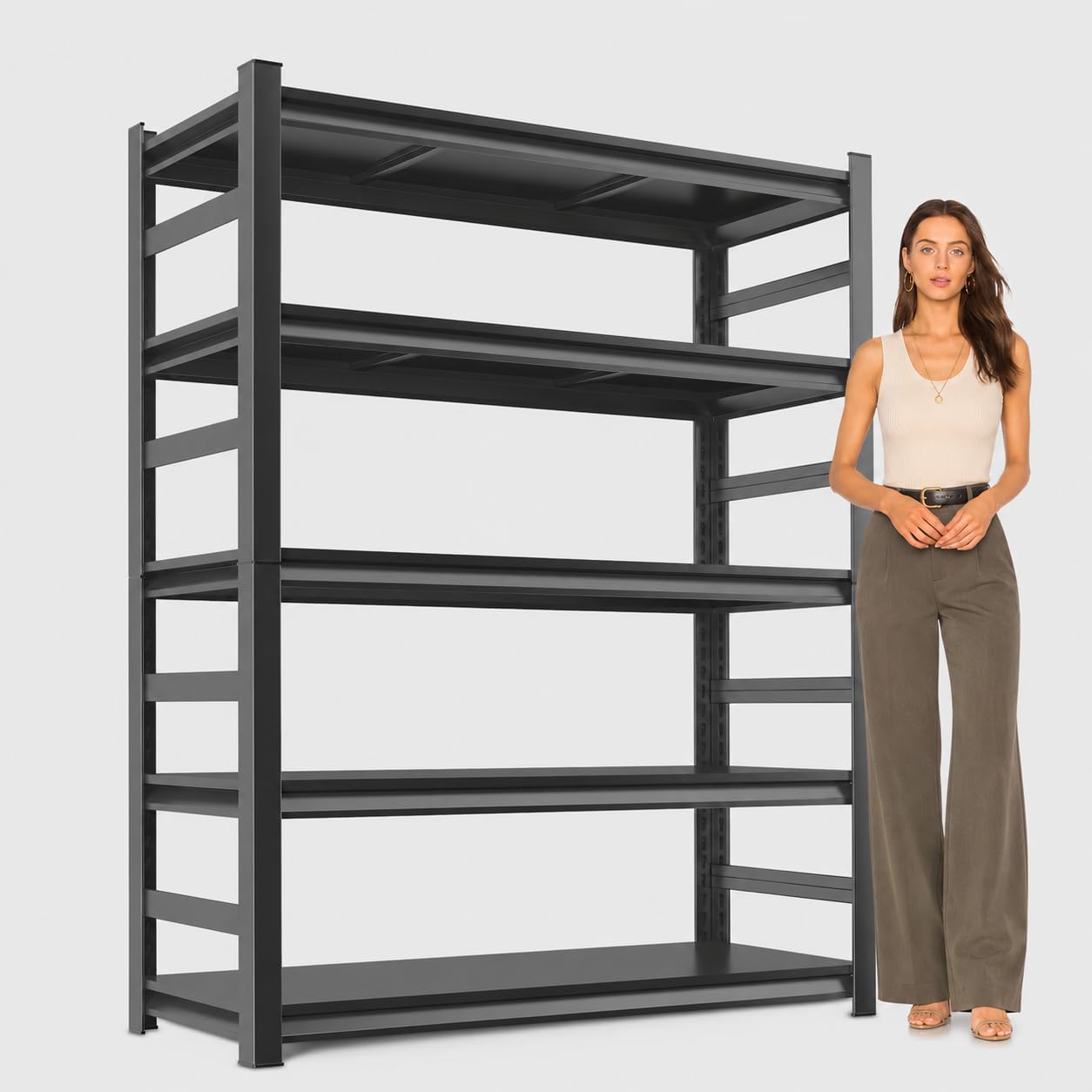
Metal Garage Shelving Unit, 5-Tier, 3,000 lbs, 72"
Highest published capacity of the two freestanding racks, five adjustable tiers, all-steel industrial build
72" tall needs real ceiling clearance, and the anchor hardware deserves a hard look
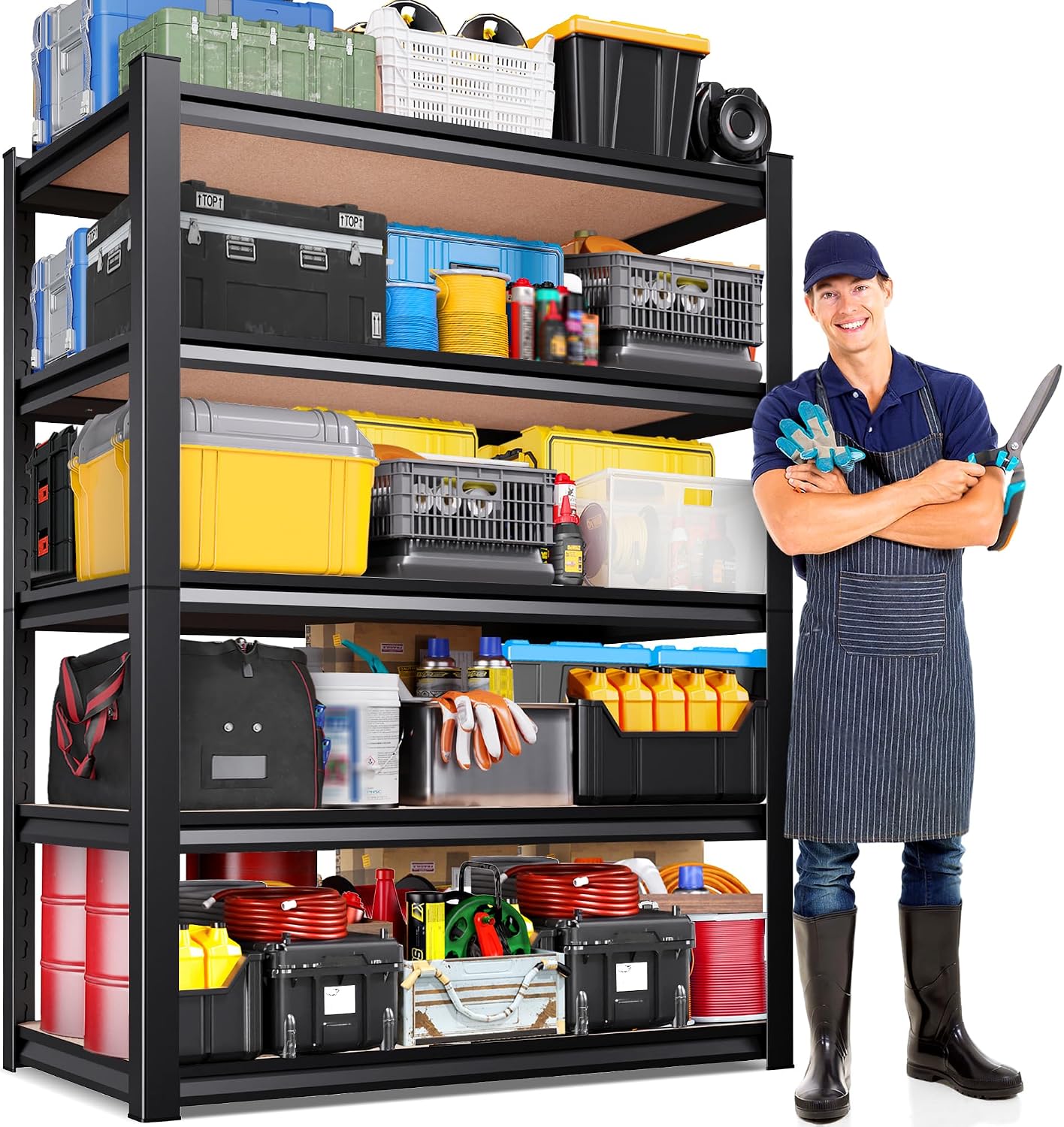
71" H x 35" W Garage Shelving Unit, 2,050 lbs, 5 Tier
The 35" width fits bays that full-size racks cannot, freestanding and adjustable
Lower rating than the 72" unit, and narrow racks mean less usable span per tier
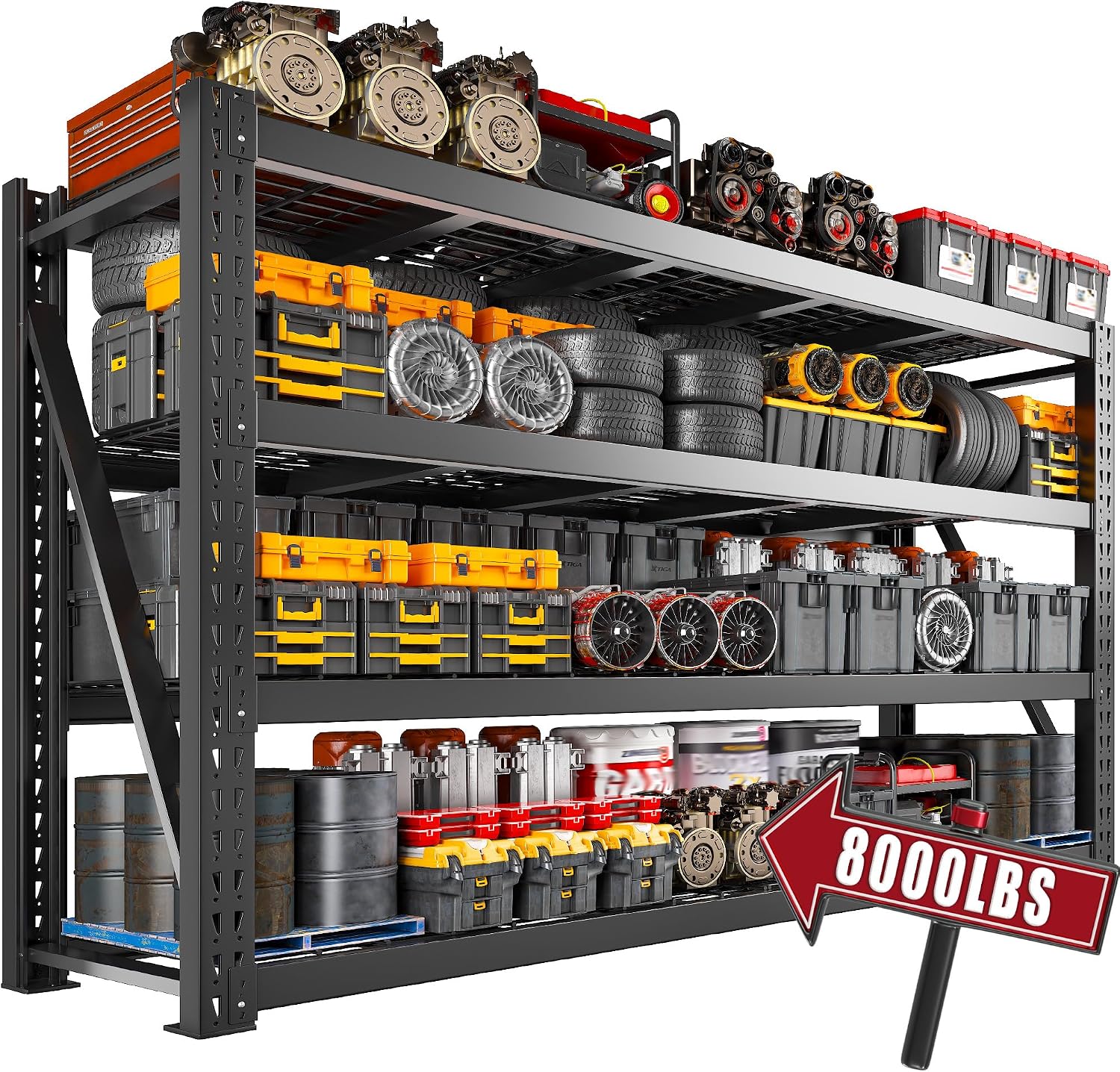
Bepatio 8000LBS Heavy Duty Garage Shelving, 77" W
The heaviest rating in this group by a wide margin, wide 77" span for long stock
Needs floor space most garages do not have, and it is priced like the industrial tool it is
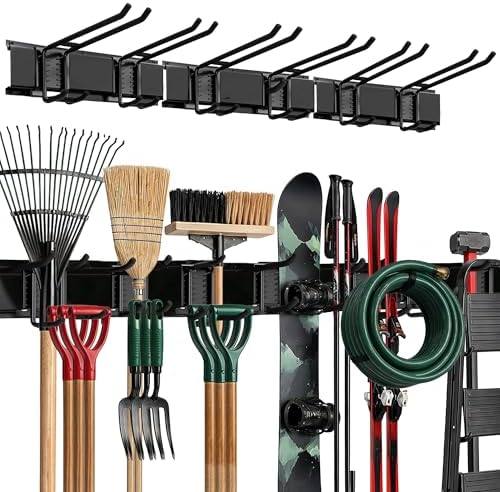
TIDYME Garage Wall Organizer, Shovel Holder Wall Mount, 48" Double Hooks
Gets shovels, rakes, and ladders off the floor and off the shelf
It is a hook, not a rack. It holds nothing until you find studs
Prices and availability were captured from Amazon Creators API and may change.
How I judge a shelving unit
Every unit gets the same four questions before it earns a spot in a client's garage. First, does the published capacity survive being doubled and left alone for a year? Second, can a homeowner with normal tools assemble and anchor it in an afternoon? Third, does the finish survive a Kansas City winter of freeze and thaw? Fourth, would I install it in a paying customer's garage and put my name on it?
A rack can pass three of those and fail the fourth. When it fails, it is almost never the steel. It is the powder coat, the hardware, or the anchor that came in the box. That is where I spend my attention now, and it is why I read a capacity number as a starting point rather than a promise.
What the weight ratings actually mean
A 3,000-pound rating does not mean you can drop 3,000 pounds on one shelf. It is a total figure, distributed across the tiers, measured with the unit sitting flat on a level floor in a controlled room. Your garage has a slope, a temperature swing, and a wall that may be drywall over air.
The per-shelf number matters more than the total, and the load path matters more than either. A freestanding rack carries weight down through its legs, which is why the floor and the feet are the first thing I check. A wall-mounted hook carries everything into whatever you bolted it to, which is why the wall type decides the project before the product does.
The 3,000-pound 5-tier rack: the default pick
Metal Garage Shelving Unit, Heavy Duty 5-Tier Adjustable Storage shelves is the unit I would spec first for a general-purpose garage wall. It is 72" tall, five tiers, adjustable, black steel, and it carries the highest published capacity of the two freestanding racks in this comparison at 3,000 pounds. Five adjustable tiers is the part that matters day to day, because the gap between shelves is what decides whether a cooler, a pressure washer, or a stack of parts bins actually fits.
The trade-off is height. At 72", this rack wants a wall without a garage door track running along the ceiling and without a window above it. Measure your clearance before you commit, not after. I would also replace the included wall hardware with anchors rated for the wall I actually have, and I would put the heaviest tier low, where the load path to the floor is shortest.
The 2,050-pound unit: the narrow-wall answer
71" H x 35" W Garage Shelving Unit, 2050LBS Heavy Duty Metal Storage Shelves is the rack for the space between the garage door track and the side wall, or the strip beside a water heater. At 35" wide and 71" tall, it slots into bays where a wider unit simply will not go, and it still gives you five adjustable tiers and a 2,050-pound published rating.
What you give up is span. A narrower rack holds narrower things, and long items like trim, conduit, or a ladder have to go somewhere else. If your garage has one awkward 36" gap and a lot of vertical room, this is the unit that turns that gap into storage. If you have eight feet of open wall, buy the wider rack and stop thinking about it.
The Bepatio 8,000-pound unit: shop-grade, not garage-grade
Bepatio 8000LBS Heavy Duty Garage Shelving, 77" W Shelves for Industrial is in a different class. An 8,000-pound published capacity and a 77" width put it in the same conversation as engine blocks, pallets of tile, and long lumber, and the price reflects that. If you are setting up a working shop, a rental property storage bay, or a garage where actual industrial loads live, this is the one rack here that is built for it.
For a normal two-car garage, the honest answer is that you are buying capacity you will never use, and you are paying for it in both dollars and floor space. A 77" wide rack eats a wall. I would rather see a homeowner put two mid-capacity racks on opposite walls and keep the middle of the floor clear, because a garage you can walk through is a garage that stays organized.
The wall organizer: the piece nobody plans for
TIDYME Garage Wall Organizer, Shovel Holder Wall Mount, 48" Double Hooks is not shelving, and that is exactly why it earns a place in this comparison. Every garage I finish ends up with the same leftover problem: shovels, rakes, brooms, extension poles, a ladder, a hose reel. Those items are long, awkward, and heavy in a way that wastes an entire shelf tier and still falls over.
A 48" double hook rail handles that category. The trade-off is that it is only as strong as what it is fastened to. A hook rail into drywall alone is a hook rail that comes down with a ladder attached, and it will take the drywall with it. This is a stud-to-stud install, or a concrete install with the right anchors, and there is no version of it where a plastic plug is acceptable.
Anchoring: the part that decides everything
Weight ratings are measured in a lab with perfect mounting. Your drywall is not a lab. Before any of these units goes up, I want to know what is behind the wall. Studs at 16" or 24" on center give you a real load path. Poured concrete gives you a different one, with the right mechanical anchors. Drywall alone gives you a shelf that is coming down eventually, and the only question is whether it lands on the car.
The second question is the floor. A freestanding rack on a sloped garage floor will rock, and a rocking rack works its anchors loose over a winter. Shim the feet, then anchor the unit to the wall so it cannot walk. That is a fifteen-minute step that most people skip, and it is the difference between a rack that is still plumb in three years and one that is not.
Powder coat, temperature swings, and rust
Kansas City gives a garage a full range of abuse, from a humid August to a February freeze, and that cycle is what kills cheap finishes. I have watched powder coat flake off shelving long before a weld showed any sign of trouble. When you unbox a rack, look at the corners and the joints, where the coating is thinnest. That is where the rust starts.
All four of these products are steel, and steel in an unconditioned garage needs a little respect. Keep the rack off standing water, do not store a wet mop against it, and if you live somewhere with road salt, rinse the feet once a season. None of that is complicated. It just has to happen.
How I would lay out a two-car garage
Racks go on the side walls, low and wide, with the heaviest tiers at knee height. The back wall gets the hook rail, because that is where long-handled tools live and where they are easiest to grab. The ceiling is the only free real estate in the garage, and if you are not using it, you are renting it to the air.
If I had to pick one unit from this list for a typical homeowner, it would be the 3,000-pound 5-tier rack, with the 2,050-pound narrow unit filling whatever gap the first one cannot reach. The Bepatio is the answer for a shop. The hook rail is the answer for everything a shelf was never going to hold.
What I am testing next
I have four shelving units and two ceiling racks sitting in a garage through a full winter of freeze and thaw, watching for the failures that only show up after a season. The cheap powder coat is failing before the welds, which is the same pattern I have seen for eight years, and it is the reason I keep telling people that the finish is the spec you cannot read on the box.
If you are comparing these four, start with your wall type and your ceiling height, then buy the rack that fits both. The capacity number is the easy part. The mounting is the job.